The Certainty Trap: Why Fast Feels True
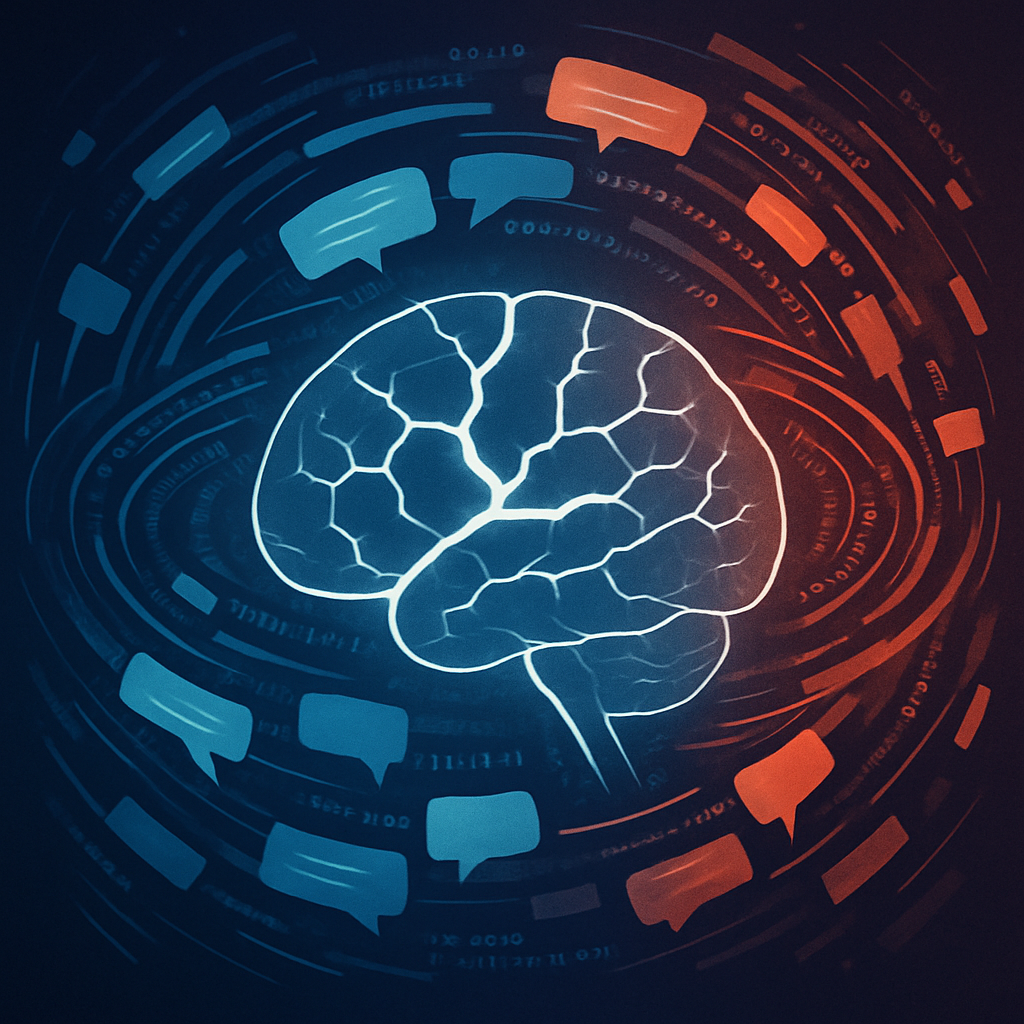
We live in an era where information moves faster than reflection. Our attention is constantly fragmented, and in that state, the mind leans toward whatever feels familiar, simple, and certain—even when it isn’t true. This is the Certainty Trap: a cognitive shortcut that forms when a tired or overloaded brain prefers quick answers over complex, accurate ones. Digital environments amplify this tendency by rewarding speed, novelty, and emotional intensity, making shallow processing feel like understanding and repetition feel like truth. Over time, nuance becomes uncomfortable, ambiguity feels like friction, and misinformation spreads not because people lack intelligence but because they lack bandwidth. The solution isn’t withdrawal—it’s rebuilding the cognitive conditions that allow depth, analysis, and reflection. By slowing down, questioning more gently, and using tools like AI as thinking partners rather than shortcuts, we can reclaim the capacity for deeper understanding in a world increasingly optimized for certainty.
We live in a time when information is everywhere. You’d think that having so much at our fingertips would automatically make us better informed. But that assumes we read everything with the same level of scrutiny. In practice, we often rely on a much quicker filter: whether something fits with what we already think. If it does, it feels true long before we’ve actually checked.
But this habit of trusting what feels familiar doesn’t happen in a vacuum; it’s happening inside a digital environment that constantly fractures our attention. The more overloaded and distracted we become, the less capacity we have for slow, effortful thinking. And when our mental bandwidth is stretched thin, we rely even more on the quickest shortcut available: the sense of “this fits what I already think, so it must be true.” Fragmented attention doesn’t just coexist with confirmation bias; it accelerates it.
The rise of sound-bite thinking isn’t just a cultural trend. It’s a cognitive shift driven by fragmented attention, overstimulation, and the pace of digital life.
This is the Certainty Trap: a modern pattern where a tired mind prefers clear, quick answers over complex, truthful ones. And it’s becoming one of the hidden engines behind misinformation.
1. Fragmented Attention Creates a Hunger for Quick Closure
Modern life celebrates multitasking, but the brain doesn’t actually multitask. It switches rapidly, constantly, exhaustingly between tasks.
Every switch comes with a cognitive cost:
Working memory drains
Comprehension drops
Errors increase
Focus becomes harder to sustain
When this becomes the daily rhythm, something subtle happens:
The brain begins to prefer information that doesn’t require effort.
Ambiguity feels uncomfortable.
Nuance feels slow.
Complexity feels like friction.
Quick certainty, even if it’s wrong, feels like relief.
The more fragmented our attention becomes, the more we crave the soothing simplicity of definite answers.
2. Shallow Processing Makes Sound Bites Feel Like Understanding
Digital environments reward speed and novelty. As a result, the brain adapts to process information horizontally (wide and shallow) rather than vertically (slow and deep).
Shallow processing creates two illusions:
The Illusion of Knowledge
A headline or post feels accurate because it delivers a bite-sized sense of completion.
The Illusion of Truth
Familiarity becomes a proxy for accuracy: “I’ve seen it everywhere, it must be true.”
This is where misinformation grows effortlessly. A confident, simple claim can feel more trustworthy than a complex, nuanced explanation.
3. Emotional Shallowing Lowers Our Defenses
Attention drives emotion
Constant interruptions don’t just scatter our focus; they scatter our emotions. Each time attention shifts, the emotional response that was forming gets reset, leaving feelings shallow and incomplete before the next stimulus takes over.
This leads to a pattern of emotional shallowing where:
Feelings move quickly
Reactions intensify
Empathy fatigues
Nuance is harder to tolerate
A shallow emotional state is more reactive, more suggestible, and more likely to reach for quick explanations that provide instant certainty. This matters because misinformation isn’t designed to inform; it’s designed to trigger. A tired or overstimulated brain follows the emotional shortcut every time.
4. How Fragmentation Fuels the Spread of Misinformation
Misinformation spreads not because people lack intelligence, but because fragmented attention creates the perfect psychological storm:
The brain feels overwhelmed → seeks simplicity.
The feed is fast → offers instant opinions.
The mind is tired → accepts what feels familiar.
Emotion is shallow → reacts without reflection.
And when everything online is competing for attention, the content that spreads fastest is the content that hits the brain’s shortcuts:
certainty
novelty
outrage
identity cues
emotional punch
The challenge isn’t that people believe the wrong things; it’s that they are too overloaded to think deeply about any of them.
5. How the Certainty Trap Changes Critical Thinking
Critical thinking requires sustained attention. It requires staying with the question long enough to:
consider alternatives
seek evidence
tolerate ambiguity
examine assumptions
reflect on emotion
Fragmentation erodes all of that.
It creates a subtle restlessness that makes even small moments of uncertainty feel uncomfortable. In that discomfort, the brain often grabs the nearest conclusion, and not because it’s well-reasoned, but because it’s fast. This is what the attention economy exploits. It’s one reason conspiracy theories, polarized narratives, and oversimplified explanations feel magnetic and gain so much traction.
This is how premature certainty replaces thinking.
6. Why Outsourcing Thinking to AI Deepens the Certainty Trap (If We’re Not Careful)
AI tools can synthesize, summarize, and generate information at extraordinary speed. Used well, they can support learning, reflection, and problem-solving. But used passively, they introduce a new cognitive shortcut: the illusion that the machine’s output is understanding.
When attention is already fragmented, AI can unintentionally reinforce shallow processing in several ways:
It provides quick, confident answers that feel authoritative.
It eliminates the discomfort of wrestling with uncertainty.
It reduces the need to examine assumptions or follow the reasoning process.
It transforms inquiry into consumption rather than engagement.
The danger is not the technology itself. It is the temptation to let AI replace the cognitive struggle that deep thinking requires.
When we rely on instant answers, whether from feeds, headlines, or models, we erode the skills that allow us to evaluate those answers in the first place.
AI becomes part of the Certainty Trap when it turns complexity into output without requiring us to engage in the slow, iterative work of understanding.
Used deliberately, however, AI can do the opposite: it can augment depth by offloading surface-level tasks and freeing attention for analysis, reflection, and interpretation. The key is not to let the tool do our thinking, but to use it to support the thinking we still must do ourselves.
7. Rebuilding Depth: A Path Out of the Certainty Trap
What strategies can individuals use to combat the effects of fragmented attention on their thinking? How can we differentiate between credible information and misinformation in a fast-paced digital environment? What role can education play in fostering deeper critical thinking skills to counter the Certainty Trap?
The remedy is not avoidance or rigid restriction. It requires deliberate structure, predictable cognitive rhythms, and a return to the attentional conditions that support depth, analytical reasoning, and meaningful comprehension.
Here are a few starting points:
1. Deep Focus Sprints
Short, device-free intervals (even 5–10 minutes) retrain the attention system to tolerate stillness.
2. The Second Question
After hearing a claim, ask: “What’s the evidence behind this?”
This interrupts certainty and reopens thinking.
3. Slow Reading
Not skimming. Not scrolling. Slow, intentional reading restores cognitive depth and strengthens comprehension.
4. Emotional Check-Ins
Ask: “Why does this feel true to me?” Often, certainty is a feeling before it is a belief.
5. Digital Recess
Intentional breaks reset the reward system and reduce novelty-seeking.
6. Ambiguity Practice
Let the statement “I’m not sure yet” be a full sentence.
This builds the mental tolerance required for critical thought.
7. AI as a Thinking Partner (Not a Shortcut)
Use AI intentionally to expand your thinking rather than replace it. Once a week, choose a topic you’re exploring, such as an article, claim, or idea, and prompt AI to reveal perspectives you may have overlooked.
Try asking: “What are three well-reasoned counterarguments to this claim, and what evidence supports them?” or “What assumptions might I be missing?”
Closing Reflection: Certainty Is Comfortable, Not Correct
We live in an era in which information circulates faster than reflection, and attention has become one of the most contested cognitive resources.
The Certainty Trap is not a personal deficit; it is a predictable consequence of sustained cognitive load and environmental overstimulation.
Yet recognizing this pattern creates the possibility of stepping outside it.
We can decelerate.
We can engage with questions more deliberately.
We can rebuild our capacity for depth, reflection, and nuance.
Because the objective is to cultivate understanding, not to achieve immediate certainty, and understanding requires time, attentional stability, and the willingness to pause long enough for thought to consolidate.

The Restoration Gap: What Happens After the Scroll Stops
There is a moment after you stop scrolling that feels like calm, a small settling, a quiet pause, but the feeling is deceptive. What we experience in that instant is not restoration. It is relief, a brief drop in dopamine that marks the end of stimulation but does not activate the systems that actually allow the body to rest.
This gap between stopping and settling is what researchers call incomplete recovery. The nervous system remains partially activated, which is why so many people feel both exhausted and restless after trying to “unwind” with digital media.
Modern platforms extend this state by using behavioral signals to detect when our engagement is fading, then serving content designed to restart the anticipation loop. We drift back in, not because we lack discipline, but because the body has not yet shifted into repair.
Closing this restoration gap is not about rejecting technology. It is about relearning how rest works.
How Digital Habits Create Relief Without Recovery
There is a moment immediately after you stop scrolling, a quiet exhale and a brief settling that appears to signal the onset of calm. Scrolling is just one version of it; the same moment arrives after swiping, refreshing, tapping through feeds, or clicking from clip to clip, any fast-moving digital loop that keeps the mind in motion. It feels like you have paused, like the nervous system is finally catching up. But the sensation is deceptive.
It is not long, and it is not deep, yet it is convincing enough to feel like you have reached a point of rest. Wait a little longer, however, and the underlying pattern becomes clearer. The stillness does not actually soothe; it activates a subtle restlessness. Your attention drifts back toward the screen, checking for anything you might have missed.
It feels like rest, but it is not. It is the body shifting into relief rather than restoration, a physiological counterfeit that leaves the nervous system in a state of partial activation instead of allowing it to fully stand down.
From Stimulation to Stillness
Our days are shaped by constant stimulation, endless novelty, rapid shifts, and the subtle pulse of anticipation that keeps us checking. Once that seeking loop quiets, the body instinctively expects a shift toward rest. We evolved to oscillate between activation and repair.
The sympathetic (fight/flight) system mobilizes energy, attention, alertness, and readiness. The parasympathetic (rest/restore) system restores that energy by slowing the heart, deepening the breath, and replenishing focus.
We might tell ourselves that we are scrolling to unwind, yet our physiology remains in a mobilized state. The act is intended to calm, but actually sustains arousal, the paradox of partial soothing. Much of what feels like calm after the scroll is driven by dopamine.
The Dopamine Drop Is Not Calm
During scrolling, dopamine rises in anticipation, the subtle and steady seeking loop that keeps us checking. This is not about pleasure; it is about prediction. Dopamine spikes when something might be rewarding, not when it is.
But when the seeking ends, dopamine drops. Neurobiologists call this a reward prediction error correction, the system turning off the signal that kept you searching.
That downshift produces a brief sense of relief, a kind of biochemical exhale.
However, neurobiologically, relief is not the same as rest.
Relief simply marks the cessation of stimulation. Restoration requires a different system entirely, the parasympathetic nervous system, to come online: a slower heart rate, deeper breathing, vagal engagement, and cues of safety strong enough to allow the body to stand down.
A dopamine drop produces none of this. It does not calm the nervous system; it merely stops exciting it.
This is the restoration gap, the space between stopping and actually settling.
The Physiology of False Calm
Stress researchers call this state incomplete recovery. The body experiences momentary relief, but underlying activation remains unchanged. Over time, without real rest, this pattern builds allostatic load, the cumulative strain of living in a world that rarely allows the nervous system to fully reset.
This is why we can feel simultaneously overstimulated and exhausted. Our devices help us manage discomfort, but rarely help us resolve it.
Research from the Universities of Mainz and Amsterdam makes this paradox clear. In their Journal of Communication study, Leonard Reinecke and colleagues found that people who turned to television or games after stressful workdays expected relaxation but instead reported less recovery and more guilt. Those who most needed rest felt least restored, describing their media use as wasted time or failed self-control, a familiar echo of relief mistaken for renewal.
That guilt activates the body’s threat response rather than its care system, reinforcing tension instead of releasing it. Only when we meet ourselves with compassion, noticing discomfort without judgment, does the nervous system register enough safety to begin restoration.
The Re-Entry Loop
If our nervous system evolved to shift naturally from activation to restoration, why is that transition so difficult in the age of digital technology? Part of the answer lies in the way modern platforms extend the seeking cycle.
Algorithms do not just keep us seeking. They keep us circling.
Loop 1: The Anticipation Engine
Platforms rely on unpredictable rewards and constant novelty to activate the brain’s reward-prediction systems. As long as something might be next, dopamine stays elevated, and we stay engaged.
Loop 2: The Re-Entry Loop
But a second mechanism emerges when that loop finally breaks. When we reach saturation, when we feel “done” or exhausted, we do not experience ease; we experience restlessness. The dopamine drop leaves a small void, and stillness becomes uncomfortable.
This is precisely the moment modern recommendation systems are built to detect through behavioral signals; Algorithms infer declining engagement from signals such as:
pausing
hovering
hesitating
slowing down the scroll
rewatching the same clip
These micro-behaviors indicate declining engagement.
In response, the algorithm pivots. It introduces content that has historically restarted your anticipation loop when your behavior looked similar. Sometimes it is more novel, sometimes more provocative, sometimes simply different enough to make your mind think: Maybe this will be interesting.
The goal is not to calm you. It is to reignite possibility, the subtle spark that dopamine responds to so readily.
It does not ease the restlessness; it mobilizes it.
This is the re-entry loop, the restart of seeking at the very moment the nervous system most needs to settle. What feels like passive drifting through random content is often this reactivation pattern in disguise, prolonging a state of low-level arousal instead of allowing it to fade until the anticipation engine can restart.
Relief vs. Restoration
You can feel the difference if you pay attention.
Relief is the first exhale after tension. Restoration is the deeper rhythm that follows when the body trusts it is safe to stop guarding.
The attentional salience system, the part of your brain that decides what deserves your attention right now, pulls us toward stimuli that are familiar, predictable, low-effort, or emotionally comforting, even when those cues are not truly renewing. In the restoration gap, that pull becomes stronger, keeping us in the sensation of “almost calm” while offering no real repair.
True calm is not the absence of stimulation; it is the presence of safety. Not digital quiet, but physiological permission to let down our guard. And safety does not come from screens. It comes from cues the body still recognizes: a deep breath, a steady gaze, a familiar rhythm, a genuine connection.
Relearning Rest
You do not need to reject technology to reclaim calm.
You need to close the gap between stopping and settling, restoring the basic biological cycle of activation, release, and repair.
Modern digital habits interrupt the final step in that cycle. We stop the activity, but the nervous system does not receive enough cues to shift out of alertness. Relearning rest means giving the body the information it needs to complete that transition.
These small actions can give your body enough information to shift from relief into actual restoration:
1. Pause long enough to let arousal decrease
When a stimulating activity stops, the nervous system needs a brief window, even a few seconds, for physiological arousal to drop. This is well-documented in stress recovery and attentional reset literature.
A short pause (3–5 seconds) creates space for the transition from engagement to deactivation to begin. This can keep you from immediately re-entering the loop.
2. Interrupt the behavioral loop
Re-engaging with the device (e.g., scrolling, swiping, refreshing) reactivates the seeking circuit. Breaking the loop with any small, intentional action helps signal the brain that the task is over.
Research shows this can be as simple as:
setting the device down
turning your body slightly away
placing your hands on your lap
closing the task window
Small physical interruptions reduce the automatic pull back into anticipatory behavior.
3. Shift visual attention away from near-field focus
Screens keep your eyes in near focus, which is associated with higher cognitive load and increased vigilance. Shifting your gaze even briefly to a farther distance helps reduce arousal and ease visual strain.
Evidence from visual neurobiology shows that:
Shifting from near-focus to distance-focus reduces visual strain and can decrease physiological markers associated with vigilance
widening the visual field decreases threat-surveillance engagement
Practically, this can be done by:
looking across the room
looking out a window
letting your gaze rest on something stable and non-dynamic
4. Introduce a small physical state change
Posture and physiology influence one another.
Micro-movements, standing up, stretching, or even adjusting your shoulders, can help shift the body out of the static, forward-focused position associated with digital engagement.
This aligns with research on embodied cognition, which shows that small posture shifts can help down-regulate cognitive effort and redirect attention.
5. Replace digital stimulation with cues of actual safety
Restoration requires cues that the nervous system reads as “safe enough to relax.” These are not esoteric; they are ordinary human contexts that research consistently shows support parasympathetic activation:
brief social connection
warm conversation
a few minutes in nature or fresh air
gentle movement
quiet physical presence with another person
These environments reliably support recovery and counter incomplete deactivation.
6. Normalize small, frequent recovery moments
Effective restoration does not require dramatic interventions.
Stress-recovery research is clear: short, frequent micro-breaks are more effective than long, infrequent pauses.
This can mean:
thirty seconds of non-digital rest
a minute of looking away
a short walk down a hallway
taking a few breaths through the nose
changing location for a moment
Rest is cumulative, not episodic.
Relearning rest is not about stepping away from technology; it is about helping the nervous system complete the biological cycle it was built for.

The Reward Trap: How Dopamine Keeps You Hooked on the Next Hit
There’s a reason checking your phone feels irresistible—it’s not the reward itself but the anticipation that keeps you hooked. Each notification, refresh, and scroll activates the brain’s dopamine system, driving us to seek “what might come next.” The Reward Trap explores how digital design hijacks our natural curiosity—and how awareness, intentional design, and small environmental shifts can help us reclaim focus and calm.
The Hidden Rush Before You Even Check
There’s a small rush before you even unlock your phone. Not after the notification appears, not when you see what’s there, but in the moment just before. That brief surge of anticipation is your brain’s way of signaling that something important might be waiting.
We often call it craving, habit, or distraction. But what’s really happening in that split second is one of the brain’s most powerful learning mechanisms at work. We’re not addicted to the reward itself; we’re addicted to the possibility of it.
Why Dopamine Isn’t About Pleasure
Deep in the midbrain, a cluster of neurons releases dopamine, the neurotransmitter often associated with pleasure. But dopamine isn’t just about pleasure; it’s about wanting. It’s the signal that keeps us seeking, scanning, and chasing the next opportunity. What fires these circuits isn’t the satisfaction afterward, but the promise of what might come next.
This system evolved to keep us alive, to push us toward food, connection, exploration, and safety. A curious brain was a surviving brain. But in the digital era, that same circuitry is continuously triggered, and not by real survival cues, but by notifications, updates, and endlessly scrolling feeds.
The Variable Reward Loop
Modern platforms are built around what psychologists refer to as variable reinforcement. It’s the same principle that keeps gamblers pulling slot machine levers. You don’t win every time, but you win just often enough to stay hooked. That unpredictability, the moment of uncertainty, is dopamine’s favorite rhythm.
Every refresh, every “pull-to-update,” every notification is a small behavioral experiment. Will something new appear? Will someone respond? Will the next scroll reveal something surprising, validating, or enraging? The brain learns to anticipate that uncertainty as if it were nourishment. The result isn’t lasting pleasure but persistent seeking, which results in a restless energy that doesn’t easily turn off.
This is the heart of what I call the reward trap. It’s the loop of anticipation and relief that modern digital design amplifies. Infinite scroll removes natural stopping points; push notifications arrive at irregular intervals; stories disappear after twenty-four hours, creating manufactured urgency. Even something as simple as an unread message notification, a cue engineered to trigger alertness signals that something important might be waiting for you.
Each of these design elements plugs directly into that primal neural network that evolved to keep us curious and responsive. It’s not that we’ve become weaker or less disciplined; it’s that the architecture of our attention is being manipulated.
When Stillness Feels Uncomfortable
What makes this so insidious is that the system doesn’t rely on satisfaction at all. In fact, satisfaction ends the cycle. What it feeds on is anticipation. The moment we get the reward, the message, the like, the update, dopamine actually dips. The pleasure fades quickly, and our brain begins scanning for the next cue. The reward trap resets itself before we even realize we’ve been caught.
Over time, this constant oscillation between anticipation and disappointment reshapes how we experience the world. We start to feel a subtle anxiety when nothing’s happening, a need to check, scroll, or refresh just to feel normal again. Our baseline dopamine levels shift. Stillness feels uncomfortable; quiet feels empty.
The brain, once tuned for depth, becomes tuned for novelty. And the more it expects novelty, the less satisfied it becomes with the ordinary.
That’s why even long stretches of rest can feel uneasy. The same networks that used to help us find food or safety are now searching for stimulation. When that seeking goes unfulfilled, it feels like loss; not a conscious one, more like a faint background hum of unease that pushes us back toward our devices.
Awareness as an Interruption
But here’s the hopeful part: awareness itself is a form of interruption. Every habit begins with a cue and a response. By learning to recognize the cue, that split-second urge before you reach, you create space to reset. The goal isn’t to eliminate dopamine or resist every impulse; it’s to notice the moment before the click.
That moment is the hinge between automatic behavior and conscious choice. The brain’s seeking system is powerful, but it’s also trainable. When we pause, even for a breath, we begin to decouple the cue from the reward. That pause sends a new signal: I’m observing this urge rather than obeying it. Over time, that shift builds what psychologists call metacognitive awareness, or the ability to see your mind’s patterns in real-time.
Redesigning the Environment
Design can help, too. The simplest interventions are environmental rather than purely willpower-based.
Disable notifications that manufacture anticipation.
Move distracting apps off the home screen or bury them behind folders.
Replace checking moments with grounding moments: stretch, breathe, or look out a window before opening your phone.
These small changes aren’t about self-denial; they’re about redesigning the feedback loops that shape our attention. When the environment stops constantly triggering anticipation, the brain gradually recalibrates its expectations. Silence becomes less threatening. Presence starts to feel rewarding again, because dopamine isn’t inherently the problem. The issue is that digital platforms have hijacked its predictive power, replacing meaningful progress with perpetual anticipation.
Giving Dopamine Better Things to Chase
The way out isn’t to fight dopamine, but to give it better things to chase: purpose, connection, deep work, and creative flow. Real human moments that involve uncertainty; the kind that leads to growth rather than depletion.
Our goal isn’t less stimulation. It’s more intentional stimulation, the kind that builds rather than fragments our sense of self.
So the next time you feel that pull, the small thrill before you open an app or check a message, see if you can catch it. Name it. Feel it. It’s not a weakness; it’s our brain doing exactly what it was designed to do.

The Focus Illusion: Why Our Minds Crave Distraction
We often think of distraction as a failure of willpower, a flaw to be fixed through discipline and focus. But the truth is more complex. Your brain isn’t broken; it’s performing exactly as evolution designed it to. The same neural systems that once kept us alert to danger now respond to every ping, scroll, and new notification. The challenge isn’t about trying harder to focus; it’s about understanding how attention works and learning to design our environments to work with, rather than against, the brain’s natural rhythms.
The brain’s attention networks evolved to detect threat and novelty: mechanisms of survival rather than saturation. In modern life, every sound, ping, and thought competes for this limited resource. What once helped us stay alert to danger now keeps us tethered to every notification, headline, and unfinished thought. This system, built for survival, struggles to function in a world of constant stimulation.
Most of us still think the solution is “trying harder” to focus. We tighten our grip, attempt to silence the noise, and promise to stay disciplined. But the harder we try to fight distraction, the more powerful it seems to become.
We call it distraction, but the truth is more interesting. Your brain isn’t failing; it’s actually doing its job flawlessly.
The Brain’s Search for What Matters
The human brain is a prediction machine. Every moment, it scans the external world and our internal states for what might matter next. The salience network guides this process. The salience network is a system that filters incoming information and flags anything novel, unpredictable, or emotionally significant for closer attention.
Modern life just happens to provide an endless supply of such cues. Every notification, headline, and algorithmically tuned post is crafted to signal: “This might be important, pay attention!”
Add dopamine, the neurotransmitter of anticipation, and you’ve got the perfect storm. It’s not pleasure that keeps us reaching for our phones; it’s the possibility of something new. Novelty once kept us alive; now it just keeps us scrolling.
You Don’t Lose Attention — It Gets Reassigned
Attention doesn’t disappear; it’s simply redirected toward the most stimulating option in the moment.
Psychologist Daniel Kahneman called this the focusing illusion: whatever occupies our attention feels most important, even if it isn’t. That’s why a single notification can feel urgent, even when it’s irrelevant. Our brains equate salience with significance.
So when your focus drifts from your work to your messages, it isn’t moral weakness — it’s your brain executing the evolutionary algorithm it was designed for: prioritize novelty, reward uncertainty, repeat.
Distraction as Emotional Strategy
Distraction isn’t just cognitive; it’s emotional.
When tasks feel unclear, or when we sense frustration or self-doubt, the brain interprets that discomfort as a signal to move away. Checking your phone isn’t random; it’s an emotion regulation strategy.
That tiny hit of novelty relieves tension, offering a sense of control in micro-bursts. The more our digital world offers us an easy escape route, the harder it becomes to sit with frustration.
Understanding this shifts the story: distraction isn’t evidence of failure; it’s a form of emotional self-soothing.
From Control to Design
The good news is that if distraction is predictable, then so is focus. The trick isn’t to try to overpower the brain’s impulses but to design the environment around them.
Here’s how:
Reduce friction for what matters. Keep tools for your most valued tasks visible and accessible.
Increase friction for what derails you. Move social apps off your home screen, disable previews, or set short “focus windows.”
Use attention intervals. Work in brief, high-intensity bursts (20–30 minutes), followed by genuine rest.
Pair focus with emotion. Connect each task to a feeling (e.g., curiosity, purpose, satisfaction), so your emotional brain perceives it as rewarding.
Notice the trigger, not just the behavior. When you feel the pull to switch, pause and ask: What emotion am I trying to avoid right now?
Focus isn’t about restriction; it’s about rhythm: periods of engagement followed by recovery.
A More Nuanced Lens
You don’t have a focus problem; you have a competition problem. Your attention is being auctioned; not because you’re undisciplined, but because you’re human.
The path back isn’t stricter rules or guilt. It’s awareness.
When you notice what captures your attention, and why, you begin to see patterns: moments of fatigue, stress, or loneliness that make distraction feel irresistible. That awareness isn’t weakness; it’s agency.
Because the most important skill isn’t perfect concentration.
It’s the ability to return, again and again, to what truly matters.

The Compassion Shift: The Science of Being Kind to Your Digital Self
We often treat self-criticism as discipline — a way to hold ourselves accountable. But research shows that compassion, not judgment, is what actually helps us change. The Compassion Shift explores how being kind to ourselves isn’t weakness; it’s emotional regulation in action. When we respond to digital stress with care instead of control, we calm the body, open the mind, and reclaim the power to choose how we engage — online and off.
In the quiet moments after scrolling, there’s often a familiar whisper: “Why do I keep doing this?”
We promise ourselves we’ll stop, that tomorrow we’ll be more disciplined, more mindful, more in control. Yet somehow, we find our resolve crumbling, and our thumbs tracing the same familiar loops across glass.
It’s easy to mistake this cycle for weakness. But what if it’s not a failure of willpower — what if it’s a misunderstanding of how emotional regulation really works and what actually leads to lasting change?
From Self-Criticism to Self-Connection
For years, psychology treated self-criticism as a motivator or as the voice in our minds that “keeps us accountable.” But research tells a different story. Self-criticism tends to activate the brain’s threat-defense system; increasing cortisol, tension, and avoidance behaviors.
In contrast, self-compassion; which is the simple act of treating ourselves with kindness when we stumble activates the care system, releasing oxytocin and stimulating the parasympathetic branch of the nervous system. We literally calm our bodies enough to restore regulatory balance, the state from which perspective and choice become possible.
Dr. Kristin Neff, one of the pioneers of self-compassion research, describes it as having three parts:
Self-kindness – being gentle with yourself instead of judgmental.
Common humanity – recognizing that imperfection is part of being human.
Mindful awareness – noticing painful thoughts and feelings without over-identifying with them.
In dozens of studies, people who practice self-compassion show greater emotional stability, lower physiological reactivity, higher resilience, lower anxiety, and greater motivation to make real change not because they feel guilty, but because they feel safe enough to learn and adapt.
The Digital Guilt Spiral
The Validation Loop explored how we seek external affirmation, and The Concern Paradox how we fear what we’ve created The Compassion Shift is about regulating the emotional space between the two that place where guilt often lives.
Many of us carry a quiet, persistent sense of failure when it comes to technology:
We scroll too long.
We snap at our kids when distracted.
We promise ourselves “just one more check.”
Then comes the shame spiral: “I should know better.”
But guilt narrows our focus to self-blame, not self-understanding. It’s a reactive regulation strategy; an attempt to suppress emotion through judgment. Neuroscience shows that guilt and shame activate the same brain regions as physical pain (the anterior cingulate cortex). When we feel “bad about ourselves,” our brains treat it as a threat, not an opportunity to learn.
Compassion interrupts that loop. It shifts the regulatory mode from suppression to reappraisal, transforming “What’s wrong with me?” into “What am I feeling right now?”
That subtle shift moves us from control to connection and from self-punishment to presence.
The Physiology of Kindness
Compassion isn’t soft; it’s strategic.
When we respond to digital stress or overuse with self-compassion, we down-regulate sympathetic arousal (the body’s fight-or-flight response) and up-regulate vagal tone, a key marker of emotion regulation and attention stability.
In other words, kindness doesn’t just feel good; it rebalances the nervous system, which helps us stay grounded online and off. Each time we meet a moment of digital frustration with empathy instead of judgment, we reinforce adaptive regulatory pathways, strengthening patience, cognitive control, and emotional awareness.
We’re not simply “being nicer to ourselves.” We’re training the nervous system to recover faster from stress and to stay flexible instead of reactive..
Practicing the Compassion Shift
So how do we apply this in our daily digital lives?
Start small. The goal isn’t perfection, it’s emotional flexibility.
Pause with curiosity, not criticism.
When you notice you’ve been scrolling longer than intended, take a breath and ask: What was I seeking? Connection? Relief? Escape
This simple pause engages meta-awareness, the first step in regulating emotion through reflection rather than reaction.Name the emotion beneath the action.
Maybe it’s boredom, loneliness, or anxiety. Naming it recruits the prefrontal cortex, the part of the brain that modulates activity in the amygdala (the brain’s alarm center). This shift from automatic to deliberate awareness is the essence of emotion regulation.Acknowledge your humanity.
Everyone struggles with attention, especially in environments engineered for engagement. You’re not weak; you’re wired for salience. Recognizing that doesn’t excuse behavior, but it does contextualize it, creating the psychological safety that supports change.Offer yourself a compassionate cue.
Try a phrase that feels authentic to you:“I’m learning how to do this differently.”
“It’s okay to begin again.”
“This moment is enough.”
These cues act as regulatory anchors, helping the nervous system shift from threat to calm with repetition
Design with kindness in mind.
Adjust notifications or routines not from frustration, but from care. You’re not punishing distraction; you’re reducing cognitive load and supporting attentional regulation.
Beyond the Screen
Compassion doesn’t erase the noise, but it helps us hear ourselves through it. It reminds us that behind every digital habit lies an emotional signal: a need for connection, belonging, comfort, or meaning.
When we meet those needs with curiosity instead of criticism, our devices become less of a battlefield and more of a mirror, reflecting the ongoing work of emotional regulation in a connected age.
References (for further reading)
Gross, J. J. (1998). The emerging field of emotion regulation: An integrative review. Review of General Psychology, 2(3), 271–299. https://doi.org/10.1037/1089-2680.2.3.271
Neff, K. D. (2003). Self-compassion: An alternative conceptualization of a healthy attitude toward oneself. Self and Identity, 2(2), 85–101. https://psycnet.apa.org/doi/10.1080/15298860309032
Rockliff, H., Gilbert, P., McEwan, K., Lightman, S., & Glover, D. (2008). A pilot exploration of heart rate variability and salivary cortisol responses to compassion-focused imagery. Journal of Clinical Neuropsychiatry, 63(4), 239–245. https://self-compassion.org/wp-content/uploads/publications/Heart_rate_variability.pdf
Verduyn, P., et al. (2020). Do social network sites enhance or undermine subjective well-being? A critical review. Social Issues and Policy Review, 14(1), 274–302. https://ppw.kuleuven.be/okp/_pdf/Verduyn2017DSNSE.pdf

When Awareness Becomes Anxiety: How Guilt and Worry Keep Us Stuck Online
It’s late. You meant to check your phone for a minute, but an hour disappears. Guilt turns to shame, worry follows, and you reach for your phone again. Learn how compassionate awareness can break the loop.
It’s late.
The kids are in bed, and the house is finally quiet.
You sit down on the couch to catch up on messages, just for a minute.
An hour later, you’re still there, thumb flicking through an endless feed. The dishes are still in the sink, emails are unanswered, and that feeling hits: guilt, then shame.
I should be doing something else.
Why can’t I just put this thing down?
You put your phone away and promise yourself, 'Tomorrow will be different.' But the next night plays out the same way: overuse, guilt, worry, escape, repeat.
You know what’s happening, and that awareness should help… but somehow it doesn’t. Instead, it turns into a low hum of anxiety; the more you worry about your habits, the harder they are to change.
This is what psychologists call the Concern Paradox, when awareness of our behavior triggers the very emotions that make it harder to change.
When Awareness Turns into Anxiety
Most digital wellbeing advice starts with a simple rule: notice your use.
Awareness is important because it is the foundation of self-regulation. But awareness without compassion can backfire. When self-observation turns into self-criticism, it activates guilt and shame rather than insight and control.
Our research on Problematic Digital Media Use (PDMU) found that participants who reported high concern about their digital habits often scored higher in compulsive checking.
The more they worried, the more they used technology to cope with their worry.
The Guilt–Worry–Escape Loop
Here’s how it usually unfolds:
Trigger: You reach for your phone out of boredom, stress, or habit.
Guilt: You realize you’ve lost another hour to scrolling.
Shame: You feel like you should have more control, and self-criticism takes over.
Worry: You set limits, delete apps, or promise yourself tomorrow will be better.
Escape: When the feelings get heavy, you reach for your phone again — just for a moment of relief.
Repeat: The relief fades, guilt returns, and the cycle begins again.
Technology becomes both the source of stress and the solution for it, a self-reinforcing loop that numbs the discomfort it creates.
The Psychology Behind the Loop
It’s not a lack of willpower that keeps us on our phones; it’s how our brains learn to trade relief for control. From a brain perspective, guilt and shame activate the threat system, which is the same network that signals danger. When the “threat” is internal (“I shouldn’t be doing this”), the mind looks for a way to soothe itself. That relief often comes from micro-distractions: checking messages, scrolling for novelty, or seeking small hits of social reassurance.
Over time, the brain learns a shortcut: feeling bad → phone = temporary relief. Each repetition strengthens the pattern.
Awareness without compassion becomes a trigger instead of a tool.
How to Break the Cycle
You don’t need to give up your devices to regain balance; you need to change the tone of your awareness.
1. Be curious, not critical.
Notice your habits without judgment. Ask, “What am I feeling right now?” instead of “What’s wrong with me?”
2. Focus on patterns, not perfection.
The goal isn’t zero screen time; it’s noticing when and why use becomes emotional rather than intentional.
3. Replace guilt with grace.
Self-compassion strengthens self-control. Acknowledge small slips and reset without shame.
4. Create pauses, not punishments.
Even a few seconds of stillness, a deep breath before picking up your phone, can help retrain your brain’s automatic response.
For Parents and Educators
When guiding children and students, it’s tempting to focus on: limits, warnings, and control. But fear and guilt rarely build healthy habits; they build avoidance.
Instead, invite reflection:
What feels good online? What drains you?
When does connection become compulsion?
How can we notice our triggers with kindness, not criticism?
When awareness feels safe, learning follows.
The goal isn’t perfect behavior; it’s self-understanding.
Moving Forward
We don’t change by shaming ourselves into control.
We change by noticing patterns, understanding them, and treating ourselves with patience.
Awareness is the key — but compassion is the hand that turns it.
Next time you find yourself lost in the scroll, don’t start with self-blame; start with curiosity.
That small moment of grace might be the first real reset. That’s where real change begins, not with a rule, but with a moment of kindness.
Explore More
This post is part of the Beyond the Screen series on the psychology of digital habits.
Read the companion article The Validation Loop to learn how social approval drives compulsive checking.
For more insights on digital balance and resilience, visit beyond-the-screen.ca.

The Validation Loop: How Social Approval Drives Compulsive Checking
Every like or comment delivers a tiny hit of dopamine, keeping us coming back for more. Learn how the need for social approval creates a “validation loop” — and how to break free.
You post a photo. Within seconds, your screen lights up: hearts, comments, new followers. It feels good. You check again a minute later, just to see if anyone else noticed. Before long, refreshing becomes automatic.
Welcome to the Validation Loop, a powerful psychological cycle where the search for approval fuels the urge to check again and again.
The Science Behind the Scroll
Every notification delivers a small hit of dopamine, the neurotransmitter tied to pleasure and anticipation. Unlike predictable rewards, social feedback arrives on an unpredictable schedule, sometimes instant, sometimes delayed, what psychologists call a variable-ratio reinforcement. That unpredictability makes the behavior especially sticky; our brains learn that checking might pay off next time.
In our research on Problematic Digital Media Use, the Need for Social Approval consistently predicted higher levels of compulsive digital checking. That means that those who relied more on external validation, such as likes, comments, and follower counts, reported stronger feelings of anxiety when disconnected and greater difficulty controlling use.
Why Validation Feels So Necessary
Humans are wired for connection. Approval once kept us safe in social groups; today, algorithms simulate that safety with metrics. The problem isn’t that we like to be liked; rather, it’s that metrics become meaning. When digital reactions replace genuine interaction, our sense of worth begins to hinge on the screen.
Neuroscientific research reinforces this: frequent social-media checking is linked to heightened activity in the nucleus accumbens, the brain’s reward center. Over time, the brain starts anticipating rewards that may never come, pushing us to refresh compulsively even when feedback has stopped.
Signs You’re Caught in the Loop
You feel uneasy if no one reacts to your post.
You refresh even when nothing new appears.
Your mood fluctuates with notifications.
You compare your engagement to others’.
Breaking the Cycle
Name the Need.
Before opening an app, ask: “What am I hoping to feel?” connection, affirmation, distraction, excitement.Delay the Check.
Add a 30-second pause before opening notifications. Small delays retrain reward circuits.
Redefine Validation.
Seek acknowledgment through activities that build competence or closeness offline (e.g., teaching, exercise, creative work).Curate Your Feed.
Unfollow accounts that trigger comparison; follow people and ideas that inspire.Create Without Counting.
Post something meaningful and avoid checking numbers for 24 hours.
The Bigger Picture
The Validation Loop reminds us that technology amplifies human psychology; it doesn’t create it. We all crave connection, but platforms convert that craving into a currency of attention. Breaking the loop isn’t about abandoning digital life; it’s about reclaiming control of our focus and sense of self.
As I discuss in Beyond the Screen: Resilient Kids in a Digital World, helping children, and ourselves, distinguish connection from comparison is one of the most powerful forms of digital resilience we can teach.
Moving Forward
Try this today:
Put your phone facedown for one hour. Notice the impulse to check, not to shame yourself, but to observe it. Every time you resist the urge, you strengthen the muscle of mindful attention.
Small moments of mindful awareness, repeated daily, rewrite the loop.
Join the Conversation
Breaking the validation loop starts with awareness — but it grows through community. Take a moment this week to notice when you reach for your phone. What emotion are you chasing? If this article resonated, share it with someone who might be caught in their own loop. Together, small acts of awareness can shift the culture of constant comparison toward one of connection.
→ Share your reflections or favorite strategy on Instagram or LinkedIn using #BeyondTheScreen; I’d love to hear how you’re building digital resilience in your own life.