
Jason Daniels Jason Daniels

Why We Struggle to Be Alone With Our Thoughts

We are increasingly filling every moment with input—podcasts, music, notifications, content. But what happens when there’s nothing directing our attention? This article explores why being alone with our thoughts can feel uncomfortable, and what constant input may be changing about how we think.

I was getting ready to take my dog for a walk the other day. It’s something I do regularly, usually without much thought. But this time, I couldn’t find my headphones.

At first, it didn’t seem like a big deal. I assumed they’d turn up quickly. But after a few minutes of searching, my response shifted. The idea of going for a walk without them started to feel increasingly unappealing.

I told myself I would just check one more place. Then another.

Nothing about the walk itself had changed. I could still go. But the thought of spending an hour without a podcast, an audiobook, music, or some form of input felt uncomfortable. More uncomfortable, it seemed, than continuing to look for them.

In the end, I spent far longer looking for my headphones than I would have spent simply walking without them. This made me start to think about how accustomed I’ve become to filling the space between moments.

The Disappearing Space Between Moments 

There was a time when small gaps in the day were simply left unfilled. Walking, waiting, commuting, standing in line, were moments where nothing in particular was happening. They weren’t especially productive or entertaining, but they created space.

Increasingly, those moments are occupied. We listen to something while we walk. We check something while we wait. We move quickly from one form of input to another, often without transition.

There are fewer points in the day where attention isn’t directed externally. This isn’t necessarily intentional. In many ways, it’s efficient. Access to information, entertainment, and connection is immediate, and in most cases, useful. But when these gaps are consistently filled, the absence of input feels less neutral than it once did.

This points to something different than distraction.

When Nothing Is Directing Your Attention 

It’s not just that we prefer having something to listen to or engage with. It’s that the absence of input can start to feel uncomfortable in itself.

Being alone with our thoughts used to be a more common, and largely unremarkable, part of daily life. It happened in small, unstructured moments where attention wasn’t directed externally.

Those moments haven’t disappeared entirely, but they’ve become easier to avoid. When they do occur, they can feel less familiar. Thoughts surface more noticeably. Attention becomes less guided. There’s no external structure organizing what we think about or how long we stay with it.

That experience isn’t necessarily negative, but it is less controlled. It can feel less predictable than engaging with something designed to hold attention. What’s happening here is not just preference, but familiarity.

When moments without input occur less often, we have fewer opportunities to get used to them. Like any experience, the less frequently we encounter it, the less comfortable it tends to feel.

External input provides structure and reduces cognitive load. A podcast, a playlist, or a stream of content organizes attention for us. It determines what we focus on, how long we stay with it, and when we move on. Without it, the mind must decide what to focus on, what to ignore, and how long to stay with it. That additional demand can make internally directed thought feel more effortful, even when nothing external has changed.  

Over time, if most of our attention is externally guided, internally directed thought can begin to feel less natural. Not because it’s inherently more difficult, but because it’s less practiced.

From a cognitive perspective, these quieter moments are not empty. Research on what’s known as the brain’s default mode network suggests that when external demands are low, the brain shifts into a mode associated with memory consolidation, self-reflection, and making connections between ideas. In other words, what feels like “nothing happening” is often when a different kind of mental activity occurs. 

This reflects a broader shift between two modes of attention. When we engage with external input, attention is guided for us. It is structured, paced, and directed toward a clear object. When that input is removed, attention becomes internally generated. It requires selecting, sustaining, and shifting focus without external prompts.

These are different cognitive demands. One follows structure. The other creates it.

When attention is continuously directed outward, this mode is engaged less frequently. Over time, that may not only reduce how often we enter this state, but also how familiar it feels. The result is that internally directed thought doesn’t just occur less often—it can begin to feel less comfortable when it does.

This helps explain why the absence of input can feel uncomfortable. It’s not simply that nothing is happening. It’s that we’re being asked to engage in mental activity that we may not spend as much time doing.

When Silence Isn’t Neutral

It’s also important to acknowledge that being alone with our thoughts is not always a neutral experience.

For some, unstructured time can surface anxiety, rumination, or intrusive thoughts. In these cases, filling the space is not simply about preference or habit. It’s a way of managing something that feels genuinely difficult to sit with.

There is a difference between discomfort that comes from unfamiliarity and discomfort that reflects underlying distress. The first often decreases with exposure. The second may require different forms of support. What makes this more complex is that when unstructured time becomes rare, it becomes harder to distinguish between the two.

What Gets Lost When Attention Is Always Directed 

The effects of this shift are subtle, but they accumulate over time. One consequence is that fewer ideas are carried far enough to develop. A decision is made quickly rather than revisited. A reaction is acted on rather than examined. A potential insight never fully forms because attention has already shifted elsewhere.

This also changes how we respond when those moments do occur.

If we are less accustomed to directing our own attention, thoughts can feel more intrusive or difficult to manage. Instead of remaining a neutral background process, they can feel more immediate or more persistent. It’s not necessarily that there are more thoughts, but that we have fewer opportunities to engage with them in a steady, deliberate way.

Over time, this may shape how comfortable we are with reflection itself. The ability to sit with an idea, revisit an experience, or follow a line of thought without interruption depends on having practiced doing so.

When that practice is limited, even short periods of unstructured time can feel more effortful and threatening than they would otherwise be.

These unstructured moments also play a role in metacognition; the ability to observe and evaluate our own thinking. Without time to step back from input, it becomes more difficult to notice patterns in how we react, what we focus on, and how we make decisions. In some cases, constant input may not only reduce distress , but prevent the development of the capacity to sit with it. 

The Problem Isn’t the Input 

None of this suggests that external input is inherently problematic. Podcasts, music, and other forms of content can be valuable. They can inform, entertain, and, in many cases, make otherwise routine activities more engaging. The issue isn’t the presence of input, but its consistency. When nearly every moment is occupied, the alternative becomes unfamiliar.

This isn’t a question of eliminating stimulation, but of recognizing what is lost when there is no space without it. Unstructured time plays a role in how we process experience, organize thoughts, and develop the ability to direct our own attention. If that space disappears entirely, those processes have fewer opportunities to occur.

Reintroducing Unstructured Time

If the capacity to be alone with our thoughts is shaped by practice, then the question is how that practice is reintroduced.

Not through large changes, but through small adjustments to moments that already exist.

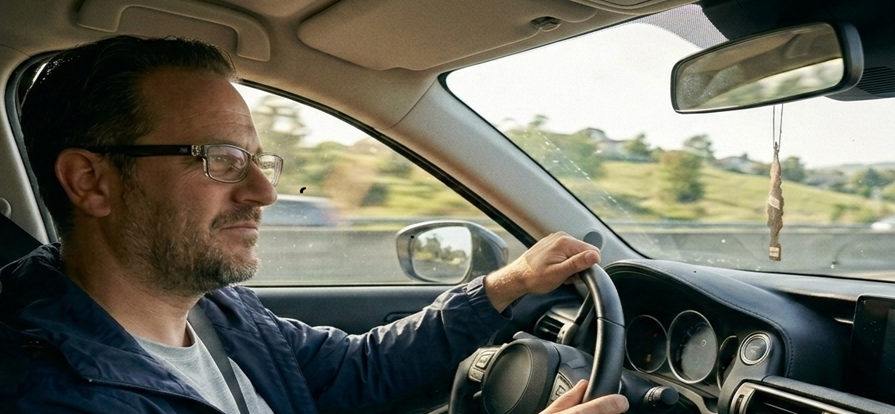
For example, taking a short walk without headphones, even for part of the time. Waiting in line without immediately reaching for a phone. Driving without filling the silence.Leaving the first few minutes of a routine activity unfilled. 

The goal is not to eliminate input, but to delay it.

These moments are often uncomfortable at first. Attention feels unsettled. Thoughts can feel scattered or persistent. That response is not necessarily a signal that something is wrong, but that the experience is unfamiliar.

Over time, that discomfort often shifts. Attention stabilizes. Thoughts become easier to follow. What initially felt effortful begins to feel more manageable.

Another approach is to structure unstructured thought.

Setting aside a short period of time to think about a specific question, revisit an interaction, or work through a decision can provide a bridge between externally guided and internally directed attention. Rather than waiting for thoughts to emerge randomly, attention is directed, but not externally controlled.

In both cases, the goal is the same: to create conditions where attention is generated and sustained internally, even briefly.

Back to the Walk 

Looking back, there was nothing about the walk that required headphones. What required them was how I experienced it.

The discomfort wasn’t about the activity itself, but about the absence of something that had become routine. Without it, the experience felt less structured, less predictable, and, in a subtle way, more effortful.

That shift doesn’t happen all at once. It accumulates gradually, as fewer moments are left unfilled. The capacity to be alone with our thoughts isn’t something we intentionally give up. It becomes less familiar when it’s no longer practiced.

A more useful question may be what happens if we begin to reintroduce it in small ways. Not by removing all input, but by leaving some moments unfilled long enough to see what surfaces.

What felt like a simple preference for having something to listen to may reflect something more fundamental: how comfortable we are when nothing is directing our attention but ourselves. 

Read More
Jason Daniels Jason Daniels

Emotional Outsourcing: When We Rely on Others to Regulate Us

Emotional regulation is something we are meant to develop internally. But in a world of constant connection and immediate feedback, it has become easier than ever to rely on external sources to manage our emotional states. This piece examines the rise of emotional outsourcing and its implications for development.
Recently, I had a manuscript rejected.

If you’ve ever submitted academic work for publication, you know that rejection is part of the process. Even when a paper isn’t rejected outright, the feedback can be blunt, sometimes harsh, and often difficult to read.

My first reaction isn’t always analytical. It’s often emotional.

It’s easy, in those moments, to take it personally, to feel defensive, to want to dismiss the critiques or explain them away. There’s also a strong pull to move quickly out of that discomfort and to seek reassurance, to talk it through, or to look for some external validation that the work is still good.

But over time I’ve noticed something. When I’m able to sit with that initial reaction, to read the feedback carefully, and to resist the urge to dismiss it or escape from it too quickly, something shifts. The critiques that initially feel uncomfortable often become the ones that improve the work the most.

That experience has made me think more broadly about how we respond to difficult emotions.

In many areas of life, there is an increasing tendency to escape from discomfort by relying on external sources like feedback, reassurance, distraction to help us feel better. I’ve started to think of this as a form of emotional outsourcing.

What Is Emotional Outsourcing?

Emotional outsourcing occurs when we rely on external sources to regulate internal emotional states. This can take many forms: seeking reassurance, looking for validation, distracting ourselves from discomfort, or turning to others to help us settle emotionally. 

These responses are not inherently problematic. In fact, they are often helpful. Humans are relational, and connection plays an essential role in emotional well-being. Talking things through, receiving support, and feeling understood can all help us process difficult experiences.

The distinction is not between independence and connection.

It is between using external support as part of the process of working through emotion, and relying on it as the primary way of resolving it.

When support becomes the default response to discomfort—when the first move is always outward rather than inward—the internal process can be shortened or bypassed. The emotion may settle in the moment, but the opportunity to understand it, tolerate it, and integrate it may be reduced.

Over time, this can shift the balance. We may become increasingly skilled at finding relief, but less practiced at regulating internally.

How Emotional Regulation Develops

Understanding this pattern requires stepping back and looking at how emotional regulation develops in the first place.

From very early in life, regulation is not something we do alone. Infants and young children rely heavily on others to make sense of their emotional experiences. One of the earliest forms of this is social referencing, or looking to caregivers to interpret unfamiliar or uncertain situations. A child encountering something new will often glance at a parent’s face, using their reaction as a guide for how to respond.

In this way, emotional understanding begins as a shared process. We learn what to feel, and how to respond, by observing others. The emotional responses children observe do not just shape how they react in the moment; they begin to form the templates they carry forward.

This continues through co-regulation. Caregivers help children manage distress by soothing, reassuring, and providing stability in moments of emotional intensity. Over time, these repeated interactions begin to form internal patterns. The child doesn’t just feel better in the moment; they begin to internalize the process of calming down.

Gradually, this external support becomes internal capacity. Through repeated experiences of being supported through discomfort, children begin to develop self-regulation. Emotional self-regulation is the ability to notice emotions, tolerate them, and respond in more deliberate ways. This shift happens slowly, through consistent exposure to manageable emotional challenges, paired with support that does not remove the experience entirely.

Healthy development, then, is not about eliminating distress. It is about learning how to move through it.

This is where the tension begins to emerge. If external regulation remains the primary response and if discomfort is consistently resolved through reassurance, distraction, or immediate relief then the internal system may not fully develop. The individual may learn how to feel better, but not necessarily how to regulate.

Why Emotional Outsourcing Is Increasing

In many ways, what we are seeing now is not a new phenomenon, but an extension of this developmental process that has been reshaped by the environments we now inhabit.

Humans are cognitive economizers. We tend to conserve effort, avoid discomfort, and move toward the path of least resistance when it is available. This is not a flaw; it is a basic feature of how we operate. What has changed is how easy it has become to act on that tendency.

Digital environments provide immediate access to external regulation. We can reach out, receive feedback, distract ourselves, or shift attention within seconds. Emotional discomfort no longer has to be endured for long before relief is available.

Over time, this can shorten the natural cycle between emotional activation and resolution. Instead of moving through discomfort, we move around it.

We are not more dependent because we are weaker. We are responding to environments that make external regulation faster, easier, and more accessible than internal processing.

What Emotional Self-Regulation Actually Requires

Emotional regulation is not the elimination of emotion. It is the ability to remain with it long enough to understand and move through it.

This process is often less visible than the outcomes we associate with it. It does not look like immediate relief. It looks like a pause, like discomfort, or like staying with a feeling before knowing exactly what to do with it.

At a basic level, regulation involves noticing what we are feeling, tolerating the discomfort that comes with it, and gradually making sense of the experience. It may involve recognizing an initial reaction, questioning it, and allowing it to shift over time rather than acting on it immediately.

For example, reading critical feedback and noticing the urge to become defensive, but choosing to sit with that reaction before responding. Or feeling anxious after an interaction and allowing time to reflect, rather than immediately seeking reassurance.

This process is often slow, uncomfortable, and effortful. But it is also where emotional capacity is built.

Without that internal processing, emotions may be resolved in the moment, but not integrated. Over time, the ability to manage similar experiences independently may not fully develop.

When Regulation Is Outsourced

The pull towards emotional outsourcing is often subtle. It can look like needing immediate reassurance when uncertainty arises. It can look like difficulty sitting with uncomfortable feelings without distraction. It can show up as a reliance on others to determine whether we are okay, or as a tendency to move quickly away from emotional discomfort before it has been processed. 

For example, receiving a critical email and immediately reacting or reaching out to someone to interpret it, rather than sitting with the initial reaction. Or feeling unsettled after a conversation and seeking reassurance before taking time to reflect on what actually happened.

These are not character flaws, they are patterns shaped by repeated experience, and over time, they can have consequences.

The Developmental Cost

If regulation is consistently outsourced, the internal system can’t fully develop. Without repeated opportunities to experience and work through discomfort, distress tolerance remains limited. Confidence in one’s ability to manage emotional challenges may not fully form. Emotional stability becomes more and more dependent on external input.

Paradoxically, this can contribute to increased anxiety. When the threshold for discomfort is low, more experiences begin to feel overwhelming. What begins as a strategy for feeling better in the moment gradually reduces the capacity to handle difficulty over time.

A Necessary Reframe

None of this suggests that we should move away from connection. Relationships are essential and support matters. Co-regulation remains an important part of how humans function across the lifespan. 

The goal is not independence from others, but the ability to return to oneself. External support should help us process and move through emotional experiences but not replace that process entirely.

What Might a Healthier Approach Look Like?

A healthier approach recalibrates how we use external support. It may involve pausing before immediately seeking reassurance, allowing some space to process emotions internally first. It may involve naming what we are feeling before sharing it, rather than using others to define it for us. It may involve staying with discomfort just a little longer than feels natural, and building tolerance over time. When we do turn to others, it shifts the role of support from solving the emotion for us to helping us work through it. 

In my own work, the most uncomfortable feedback has often been the most useful if I can stay with it long enough to understand it.

That isn’t always my first instinct. The initial reaction is to move away from it, to defend against it, or to look for reassurance that the work is still good.

But the moments that lead to growth aren’t the ones where I feel better quickly. They’re the ones where I stay with the discomfort long enough for something to change.

If the aim is to build emotional self-regulation, feeling better immediately is not always the most useful outcome. What matters more is the gradual development of the capacity to move through difficult emotions with increasing steadiness.

That capacity is not built by avoiding discomfort, but through repeated experiences of staying with it long enough to understand and process it.


Read More
Jason Daniels Jason Daniels

We Made Life Easier. Why Does It Feel Harder?

We are offering more support than ever before, while at the same time reducing the amount of friction people encounter in everyday life. Yet many young people report feeling less able to cope with ordinary stress, uncertainty, and challenge. This raises an important question: what happens to development when the conditions that build capacity are quietly removed?

When Support Replaces Navigation

I spent this past weekend in a different city, relying heavily on GPS to get from place to place. It was efficient and incredibly helpful in an unfamiliar environment. I was able to  move quickly, avoid wrong turns, and get to exactly where I needed to go.

But there’s an interesting trade-off. Despite moving through the city all day, I had no real sense of where I was. I couldn’t retrace my steps without the GPS. I didn’t have a mental map of where I’d been or how to get where I needed to go on my own. The tool did most of the work for me, and because of that, I actually found it a lot harder to learn to navigate independently.

I noticed an interesting paradox: the more I relied on GPS, the less I learned about navigation. When I navigated on my own and used GPS only when I got stuck, I actually began to learn the city.

It’s made me think about how often convenience and support, while helpful in the moment, can quietly reduce our ability to navigate difficulty on our own. In many areas of life, we are offering more support than ever before. At the same time we are reducing the amount of friction people encounter in everyday life. Despite this, many young people report feeling less able to cope with ordinary stress, uncertainty, and challenge. Something important may be getting lost in the process.

Why Development Requires Friction

In a previous post, I explored how withdrawal is increasingly being reframed as self-care. This raised a deeper question: what conditions are making this pattern more likely? Human development has always required a certain amount of friction. Friction shows up in many forms: effort, delay, uncertainty, disagreement, boredom, and failure. These are not signs that something is wrong. They are often the conditions under which growth occurs.

Learning to navigate a new environment without a map requires some trial and error, sometimes backtracking, and slowly building navigation skills. Learning to manage stress requires experiencing it, sitting with it and developing strategies to cope. Learning to think critically requires encountering ideas that challenge our assumptions and identifying why we believe what we do. In each case, discomfort is not a barrier to development; it is part of the mechanism.

When friction is present, we are required to engage. We problem-solve, regulate, adapt, and persist. Over time, these repeated encounters build confidence and capacity. We begin to internalize a simple but powerful belief: I can handle difficult things. Psychologists refer to this as self-efficacy. 

What Happens When Friction Disappears

When friction is consistently removed or bypassed, the opposite tends to happen. Tasks start to feel harder, not easier. Uncertainty becomes more unsettling. Disagreement feels more threatening. Without repeated exposure to manageable difficulty, the threshold for what feels tolerable can gradually decrease.

Digital Environments and the Removal of Everyday Friction

This shift becomes even more pronounced when we consider how both digital environments and institutional systems are reshaping the role of friction across development.

Digital environments, in particular, are designed to reduce friction. With a few taps, we can access information instantly, switch attention, avoid boredom, and remove sources of discomfort. These environments make disengagement from difficulty quick and effortless. In many ways, this is a remarkable advancement. It gives users control, efficiency, and ease.

This ease, however, interacts with something more fundamental. Humans are cognitive economizers. We tend to conserve effort, avoid discomfort, and move toward the path of least resistance when it is available. This is not a flaw. It is a basic feature of how we operate.

Digital environments do not create this tendency, but they make it exceptionally easy to act on it. They offer immediate distraction, rapid shifts in attention, and frictionless transitions away from discomfort. 

What We Lose Without Friction

For children and adolescents, frictionless environments are not just tools; they are formative contexts. Waiting is replaced by immediacy. Disagreement is replaced by curation. Boredom is replaced by constant stimulation. Over time, these patterns begin to shape what feels normal and tolerable at a very early stage of development.

Digital media did not create this shift, but it has accelerated and normalized it. It has made it easier than ever to bypass discomfort rather than move through it. These environments are not simply changing behavior; they are reshaping the conditions under which behavior develops. At the same time, institutional systems are shaping how friction is experienced in more structured environments.

Across early education, K–12 schooling, and higher education, there has been a meaningful and important expansion of support. Mental health awareness has increased. Accommodations have become more accessible. Educators are more attentive to student well-being than in previous generations; however, when support consistently removes challenges rather than scaffold engagement with them, it can unintentionally limit opportunities for growth. In some cases, ordinary developmental experiences such as academic struggle, social conflict, frustration, and uncertainty are increasingly framed as indicators that something is wrong rather than as expected parts of development.

For younger children, this may look like fewer opportunities for independent problem-solving or unstructured exploration. For adolescents, it may involve reduced exposure to situations that require navigating disagreement or failure. For young adults, it can appear as disengagement from challenge when discomfort arises.

Taken together, these shifts matter. Digital environments reduce everyday friction. Institutional systems can reduce structured friction. Across development, young people may encounter fewer opportunities to practice navigating difficulty in sustained ways.

For children, fewer opportunities to experience frustration and recovery can limit the development of early regulatory skills. For adolescents, reduced exposure to uncertainty and disagreement can make discomfort feel unfamiliar and harder to tolerate. By early adulthood, this can manifest as difficulty with sustained effort, ambiguity, feedback, and persistence.

Capacity is built through repeated encounters with challenge. This is not an argument against support. It is not a call to reduce compassion or ignore mental health. Support is essential. The issue is how support is structured. When support functions as a way to exit difficulty, it limits development. When it functions as a bridge through difficulty, it strengthens it.

Growth depends on this balance. Too much challenge can destabilize. Too little challenge can limit development. The goal is not to eliminate friction, but to calibrate it.

So what might a healthier approach look like?

Reintroducing Friction Intentionally

First, we can reclaim the purpose of self-care. Self-care was never meant to eliminate challenge. It was meant to restore capacity. Rest is not the same as relief. Relief removes discomfort; rest rebuilds strength.

A student overwhelmed by competing demands may take time to rest, recalibrate, and return to the work. A young person receiving difficult feedback may step back briefly to process the emotional response, but then re-engage with it more thoughtfully. In each case, the challenge remains, but the individual becomes more capable of meeting it.

Second, we can become more intentional about how we engage with digital environments. If these systems are designed to reduce friction, development may require us to reintroduce it deliberately. This might involve pausing before disengaging, remaining in conversations that are challenging but not harmful, or seeking out perspectives that stretch rather than simply affirm.

Third, across developmental settings, we can focus on scaffolding rather than removing difficulty. Educators and caregivers can validate distress while still encouraging persistence. They can make the process explicit, helping young people understand that frustration, confusion, and uncertainty are not signs of failure, but signals that growth is occurring.

The goal is not to raise individuals who never feel overwhelmed. It is to raise individuals who understand that feeling overwhelmed is survivable, and who have the skills to move through it.

If we want resilience, we cannot build environments organized entirely around the elimination of discomfort. We must build environments that allow young people to encounter challenges in manageable ways and to discover, over time, that they are capable of navigating them. Capacity is not built when friction disappears. It is built when we learn how to move through it.


Read More
Jason Daniels Jason Daniels

Beyond the Attention Span: Building a Tolerance for Uncertainty

We often think of attention as a battery that runs out, but what if it’s actually a muscle we’ve forgotten how to flex? From the tension of a live NHL arena to the "fog" of a struggling student, this post explores why our modern "escape hatches" are eroding our ability to sit with discomfort—and why the secret to focus isn't trying harder, but learning to stay.

How the "escape hatches" of modern life are changing our ability to sit with the unknown.

This weekend I went to an NHL game. I'm a huge Edmonton Oilers fan, and one of my favorite things to do is go to live games. The Oilers lost. But that's almost beside the point. There's a moment late in a close game where the arena gets tight, the crowd quieter than you'd expect, everyone leaning forward, nobody quite breathing. I was sitting in that feeling, nowhere to go and nothing to do but watch, when I noticed something about myself. When I watch games at home and things get tense, I often reach for my phone.

But at the game, there was no real escape. I had to sit with it.

The tension, uncertainty, and frustration of a play not going the way I wanted.

It was exciting, but it was also more stressful than I’m used to when watching from home.

Not because the game was different, but because my attention was.

That moment made me realize that attention isn’t just something we either have or don’t; it’s something we are constantly managing. Increasingly, we often manage it by escaping discomfort rather than staying with it.

The Escape Hatch: Why We Reach for Our Phones

Attention isn't a fixed trait. It develops in response to the environments we spend time in. In lower-stimulation environments, attention has to be generated internally. In high-stimulation ones, it is captured externally. Today, discomfort is optional, stimulation is immediate, and distraction is always available. What's changing is not whether we have the ability to pay attention but what our attention is being shaped to respond to.

Historically, people regularly experienced boredom, waiting, frustration, uncertainty, and sustained tasks. These moments required staying with discomfort, generating their own engagement, and maintaining focus without external stimulation.

The issue is that these are not the same conditions that build sustained attention. Sustained attention develops in environments where stimulation is lower, rewards are delayed, progress is slower, and individuals have to generate their own engagement.

When those conditions are present, attention is not just required, it is practiced and strengthened.

Today, the challenge is that many of the environments where attention is being practiced look very different from the environments where it is still expected to be used, particularly in classrooms.

From the outside, these changes are often described as declining attention spans. Students seem more distracted. They disengage more quickly. Tasks that require sustained focus feel harder to maintain.

But what we’re observing may not be a loss of attention so much as a change in what attention has been practiced to do. When attention is regularly shaped in environments that provide constant stimulation and rapid feedback, sustained focus begins to feel uncomfortable.

It’s not just that the task is difficult. It’s that staying with something slow, effortful, or uncertain feels uncomfortable. In that context, shifting attention isn’t a failure. It’s a learned response—a way of regulating that discomfort.

Learning often depends on the ability to stay with something long enough for understanding to develop. Reading a complex text, working through a math problem, writing something that doesn’t come together right away all require sustained attention.

They require sitting in states where answers aren’t always obvious, progress can be slow and/or incremental, and confusion may not be immediately resolved. That period is where learning begins.

Staying in the Fog: Attention is a Learned Skill

In a classroom, the task doesn't adapt to the student's attention. The student has to adapt their attention to the task. I see this regularly as a professor. A student will approach me and say "I don't get it", and when I try to dig deeper, asking what part is confusing, the answer is often "all of it." They want the discomfort resolved, but they haven't sat with it long enough to even identify where the confusion begins. That kind of self-awareness, knowing what you know and what you don't, only develops when you stay with a problem long enough for the fog to start clearing. If attention shifts the moment difficulty appears, that process never gets a chance to start.

Over time, this can lead to difficulty persisting with tasks, an over reliance on external prompts or direction and a reduced tolerance for effortful thinking. Not because the capacity isn't there, but because it has had fewer opportunities to develop. I didn't fully appreciate any of this until I was sitting in that arena with nowhere to go and no way to escape what I was feeling.

I had to stay with it.

And while it was more uncomfortable than watching from home, it was also a reminder that the ability to tolerate uncertainty, frustration, and not knowing what will happen next is not automatic.

It is built through repeated exposure to those moments.

And importantly, those moments are often tied to the experiences we care about most.

With that stress came the experience of being in the building, fully present, watching something I care about unfold in real time. That doesn’t happen when attention is divided or redirected.

Increasingly, many of the environments we spend time in make it easy to avoid that kind of discomfort. They offer immediate relief, constant stimulation, and a way out as soon as tension begins.

Over time, that changes what attention is used for.

Building the Muscle: Practicing the Art of Staying

If we want to support attention in ourselves and in the children we work with, the solution may not be to push harder in the moment.

It may be to make small, intentional shifts in the environments we create.

That might look like putting the phone away during a moment that feels uncomfortable instead of immediately reaching for it. It might mean letting a child sit with a frustrating task a little longer before stepping in, or allowing stretches of time where nothing is happening and resisting the urge to fill them. It means not removing every frustration, delay, or moment of uncertainty from the path.

These are small things.

But small things, repeated often enough, become the conditions that shape attention.

Because attention doesn’t grow when everything is easy to escape.

It grows when we practice staying.

That night at the arena, I didn't just watch a hockey game. I was fully in it: the tension, the uncertainty, the not knowing how it would end.. The Oilers lost, but I was there for all of it. No phone, no escape, no way to manage the discomfort except to sit with it. And somewhere in that discomfort was the experience itself. That's what undivided attention makes possible. Not just focus, but presence. The ability to be fully inside something you care about as it unfolds. That doesn't happen automatically. It's built slowly, in small moments, every time we choose to stay.

Read More
Jason Daniels Jason Daniels

Productive Struggle in a Frictionless World

When friction disappears, we don’t just remove discomfort; we remove practice.

When I was in high school, calling a girl’s house was one of the most stressful experiences I had to endure.

There was no text, DM, or private line directly to her.

You called the family landline, hoping her dad wouldn’t answer.

But he always seemed to answer.

There was a pause.
“Hello?”

And that was usually the moment my voice cracked. I would speak too fast, trip over my own name, and become nearly unintelligible, which only made the interaction more awkward.

If I’m honest, had I had a cell phone back then, I would’ve texted her directly without hesitation. I would’ve gladly avoided that small but very real experience of social anxiety.

And it would’ve worked.

I would’ve spared myself the discomfort.

But I also would’ve spared myself something else.

I would’ve missed repeated practice speaking to adults who were, at best, indifferent to me and, at worst, judging me.

I would’ve missed the opportunity to regulate my voice when it shook.

I would’ve missed the experience of pushing through fear to accomplish something that mattered to me.

At the time, it felt like unnecessary suffering.

In hindsight, it was training.

When Friction Disappears, Practice Disappears

Since I was a child, many of these small moments of productive friction have been engineered out of daily life. Now there are digital off-ramps. We can bypass the waiting, filter the interaction, edit the message, and avoid the pause.

But when friction disappears, we don’t just remove discomfort; we remove practice.

In developmental psychology, we differentiate between toxic stress, tolerable stress, and positive stress.

Toxic stress is unpredictable, overwhelming, and unsupported. It involves prolonged activation of the body’s fight-or-flight response without the buffering protection of stable, supportive relationships. This kind of stress can be harmful.

Tolerable stress is more intense but temporary. It may involve events like a death in the family, an injury, or a serious illness. When buffered by caring relationships, even significant stress can be processed and integrated.

Positive stress, however, is different. It involves brief increases in heart rate and stress hormones. It’s the kind of stress that occurs when we try something difficult, speak in front of others, take a risk, or push through uncertainty. It’s a normal and necessary part of healthy development.

Productive struggle is contained discomfort. It’s the kind of tension that stretches and strengthens capacity without breaking it. It might look like: not knowing the answer right away; waiting longer than you want to; feeling awkward, but staying anyway; trying again after failing; or, sitting with boredom long enough for creativity to emerge.

Children today are not weaker than children in the past. They have grown up in an environment that allows them to avoid many of the daily discomforts that most of us had no choice but to live through. If they feel bored, there’s a device that can distract them immediately. If they feel confused, there’s a search engine. If they feel awkward, there’s an escape in their phones. If thinking feels like too much work, there’s AI.

Digital media has dramatically expanded access to information and increased productivity. But it has also created immediate escape routes from discomfort. Human brains evolved to be cognitive economizers. Whenever possible, we default to automation and effort reduction. This isn’t laziness; it’s efficiency. We automate repetitive tasks so that cognitive resources can be allocated to more complex thinking.

That process is essential for learning. The challenge is that digital tools now allow us to offload not just repetitive tasks, but effortful thinking itself, and the friction that once required us to persist is now optional. If waiting isn’t necessary, then patience disappears. If thinking can be outsourced, persistence declines. If social awkwardness can be avoided, then social skills atrophy.

Under-Practiced Skills, Not Moral Decline

When we frame these changes as moral failings, we corner ourselves into unhelpful conclusions.

We either lament “this generation” or we declare that phones and digital devices have ruined our children. And if that’s true, the only logical solution is elimination — remove the phones, ban the platforms, and hope the next generation can be spared.

But that solution is neither ethical nor realistic.

Digital media and AI aren’t disappearing.

If, however, we understand these shifts as under-practiced skills rather than moral decline, the path forward changes. Shorter attention spans aren’t evidence of weakness; they’re evidence of reduced rehearsal. Lower frustration tolerance isn’t a character flaw; it’s a capacity that has had fewer opportunities to develop.

When we see the problem this way, the solution becomes practical and hopeful. We need to reintroduce productive struggle. We do this not by manufacturing hardship or shaming reliance on technology, but by intentionally rebuilding the moments of effort, uncertainty, and mild discomfort that strengthen regulation, persistence, and social skills.

Intentionally Reintroducing Productive Struggle

If many of these learning opportunities have been engineered out of daily life, we cannot rely on our kids to build resilience accidentally. We have to reintroduce productive struggle intentionally by protecting small, manageable moments of effort and uncertainty that stretch capacity without overwhelming it.

Protecting Boredom

Boredom isn’t a problem to be solved immediately. It’s a neurological pause where the brain begins searching for stimulation, connection, or creation. When we rush to fill every quiet moment with a device, we teach the nervous system that stillness is intolerable. Eight-hour drives on family vacations as a kid were excruciating, but they also motivated me to daydream and to practice my imagination. We can allow boredom to linger long enough for discomfort to soften and initiative to emerge.

Building Wait Time Into the Process

Waiting is one of the most under-practiced skills of the digital age. But tolerance for waiting is directly tied to emotional regulation. I hate waiting for my food to come at a restaurant, but I can because I had to practice this as a kid.

We can rebuild patience in small ways:

  • Letting a child wait for help for a minute before stepping in.

  • Allowing minor delays without immediate distraction.

  • Resisting the urge to fix small inconveniences instantly.

It's a small thing. But small things, repeated often enough, become capacity.

Encouraging them to “Try One More Step.”

When I asked my parents questions as a kid, they often didn’t know the answer, so it was left to me to follow my curiosity to try to answer my own questions. It was often frustrating, but it taught me to persist even if the answers to my questions were not immediately available. Before jumping in to solve the problem for our kids or allowing them to Google or outsource to AI, you could ask them:

  • “What have you tried so far?”

  • “What’s a possible next step?”

  • “What do you think might work?”

This is not about withholding support. It is about scaffolding effort.

Allowing Safe Social Friction

Looking back, I wouldn’t volunteer to relive the terror of calling a girl’s house and speaking to her father. But I wouldn’t erase it either. Social skills only grow by engaging socially, and growth rarely happens in perfectly curated interactions.

Let children:

  • Order their own food.

  • Make their own phone calls.

  • Speak to adults.

  • Navigate minor misunderstandings.

These moments may feel uncomfortable, but they are rehearsals for adulthood.

Modeling

Perhaps most importantly, we can rebuild friction tolerance in our own behavior. Family dinners without digital media are often less relaxing because we actually have to interact, resolve differences, and listen to each other. But these are also some of the most important opportunities for children to connect with parents and learn from their behavior. 

If we reach for distraction the moment we feel stuck, bored, or uneasy, we teach that discomfort is something to be avoided.

When we stay with a difficult task, finish what we start, tolerate awkward pauses in conversation, or resist the reflex to check our phones in every idle moment, we implicitly demonstrate that discomfort is survivable.

Conclusion

Those moments of productive struggle I experienced as a child didn’t damage me, but they did stretch me. They were small rehearsals in courage, regulation, and social skill development. Opportunities to tolerate awkwardness and to realize that I could do hard things.

Digital media did not make our children fragile. But it did make avoidance easier. And when avoidance becomes effortless, practice becomes optional. If we want capable, confident young people, we can’t remove every moment of discomfort, automate every pause, or eliminate every awkward interaction. Resilience isn’t built in crisis; it’s built in small, repeated experiences with discomfort that are safe enough to endure and supported enough to overcome.


Read More
Jason Daniels Jason Daniels

Are We Raising Emotionally Avoidant Adults and Calling It Self-Care? 

Is our current definition of 'protecting our peace' actually stunted growth in disguise? Real self-care was never meant to eliminate challenges, it was meant to restore our capacity to face them. It’s time to stop mistaking avoidance for strength and start building the stamina to stay present in the discomfort.

Recently, a student emailed me to let me know that she wouldn’t be attending class for the next few weeks because she was ‘prioritizing herself’. It’s something that I’ve been seeing more frequently. This one message stood out to me, not because self-prioritization is inherently wrong, but because of how commonly withdrawal is being reframed as growth. When did avoiding challenges become synonymous with strength?

I frequently hear phrases like ‘protecting my peace’, ‘this is triggering’, ‘I need to step away for my mental health’, or ‘I don’t have the capacity for this right now’. Mental health absolutely matters, and there are times and situations when stepping back is necessary, such as illness, grief, and acute mental health crises. Compassion and flexibility matter, but ordinary stress, frustration, or challenges are not the same as harm, and if we continue to treat them as such, we risk shrinking the very capacities that young adults need to develop. If higher education becomes organized primarily around comfort, it ceases to prepare students for life beyond university.

University is inherently demanding, and intellectual growth requires some cognitive discomfort. Similarly, relational growth often requires navigating conflict. If we are truly trying to help young adults to prepare for life after graduation, we must allow space for discomfort, not to overwhelm, but to teach them how to regulate, endure, and ultimately solve problems with increasing independence. 

Digital environments increasingly allow us to curate not only our social interactions, but our ideas. When young adults are consistently shielded from intellectual friction, confirmation bias deepens, and critical thinking can be short-circuited. Growth, whether emotional, relational, or cognitive, requires engagement with, not elimination of, discomfort.

The Line Between Regulation and Avoidance

An important distinction that is often missing from this conversation is that emotional regulation is not the same as emotional avoidance. On the surface, both can look similar; both may involve stepping back, taking space, or reducing intensity. But psychologically, they’re different processes with very different outcomes. 

Emotional regulation involves recognizing distress, calming the nervous system, and then re-engaging with the challenge from a calmer, steadier place. It isn’t about eliminating discomfort but rather increasing one’s capacity to remain present within it. For example, emotional regulation allows one to acknowledge that ‘this is difficult’, and ‘I need to gather myself so that I can face it.’ Over time, this process builds confidence because each successful encounter with stress becomes evidence that hard things can be managed. 

In late adolescence and early adulthood, identity formation is a central developmental task. This period is characterized by change, instability, and increasing responsibility. The capacity to manage stress doesn’t develop by removing it. It develops through repeated, supported exposure to manageable challenges. 

Emotional avoidance, in contrast, removes the stressors rather than building capacity to face them. It may involve withdrawing from a difficult conversation, dropping a demanding course, ignoring feedback, or avoiding situations that provoke discomfort. In the short term, avoidance reduces anxiety. The relief that comes from avoidance is immediate and can even feel empowering. Digital environments have made avoidance easier than ever; a mute button, an unfollow, a closed tab, and in so doing have normalized it as a default response.

Social media platforms reward emotional certainty and moral clarity. They often amplify language about ‘protecting your peace’, ‘cutting off toxicity’, often without nuance or context. Algorithms privilege content that validates rather than challenges, and decisive emotional messaging spreads more easily than developmental complexity.

At the same time, constant exposure to curated lives and public commentary heightens social comparison and perceived threats. Ordinary stress can feel amplified if it seems like everyone else is succeeding. The threshold for tolerable discomfort shrinks when the nervous system is saturated. 

If avoidance becomes the primary strategy for managing stress, the nervous system never learns that discomfort can be tolerated and worked through. The difficult class is never completed, the tense discussion is never repaired, and the challenging assignment is never revised after failure. Each escape reinforces that discomfort is something to be avoided.

In higher education, this distinction is especially important. University is not just a place to acquire information; it is a developmental training ground for adulthood. Students aren’t just learning content, but also how to handle deadlines, disagreements, evaluations, uncertainty, and responsibility. If the default response to stress is to disengage, many of these developmental opportunities can be missed.

None of this suggests that students should push through genuine crises or ignore serious mental health needs. It's also worth acknowledging that not all withdrawal is unfounded. Some students are navigating genuinely under-resourced environments, inadequate mental health support, or institutional failures that make discomfort feel less like growth and more like neglect. The answer in those cases isn't more endurance, it's better support. But that's a different problem than the one this piece is addressing. If ordinary academic and relational challenges are consistently framed as threats to well-being, we may be inadvertently making things harder for our students in the long run.

Beyond the Classroom

The consequences of this shift don’t end at graduation. Patterns rehearsed in adolescence and early adulthood tend to solidify over time. If withdrawal becomes the primary stress response, young adults may enter the workplace less prepared for feedback, less tolerant of ambiguity, and more likely to interpret ordinary professional pressure as personal harm. 

Work environments often require navigating criticism, managing deadlines, resolving conflict, and persisting through projects that are sometimes neither exciting nor affirming. Relationships might require repair after disagreements. Parenting requires endurance. Civic life requires engagement with perspectives that may not align with personal views. None of us is exempt from these demands. 

When distress tolerance remains underdeveloped, anxiety often increases rather than decreases. Novelty feels threatening, feedback destabilizing, conflict intolerable. Resilience is not only built in moments of crisis; it’s also built in the ordinary, repeated experiences of doing difficult things and realizing one can survive and even grow through them.

Building Capacity Instead

So what might a healthier model look like?

First, we must reclaim the original purpose of self-care. Self-care was never meant to eliminate challenge. It was meant to restore capacity. Rest isn’t the same as relief. Where relief removes discomfort, rest rebuilds strength. When self-care becomes synonymous with exit, we confuse temporary ease with long-term resilience.

Healthy self-care allows a student to say, “I need a moment,” not “I am done.” It creates space for recovery so re-engagement becomes possible. Regulation is what allows us to return. Avoidance ensures that we don’t.

For example, a student overwhelmed by deadlines might take an intentional evening of rest, stepping away from screens, sleeping, exercising, or speaking with a friend, and return the next day prepared to complete the work. Or a student upset by difficult feedback might pause to regulate the initial surge of emotion before revisiting the comments with curiosity rather than withdrawal. In digital life, logging off temporarily to calm comparison or outrage can serve the same purpose. In each case, rest restores capacity so that engagement remains possible. The challenge isn’t erased; the student is strengthened.

Second, we must acknowledge the role of digital architecture in shaping our thresholds for discomfort. Digital platforms are designed to reduce friction. They offer immediate distraction, curated agreement, and emotional validation at scale. When relief is always one scroll away, the skills required to sit with discomfort weaken. If our environments consistently remove cognitive and emotional friction, we shouldn’t be surprised when tolerance declines.

This doesn’t mean abandoning digital media. It means becoming intentional about it. Following diverse perspectives rather than only affirming ones. Pausing before disengaging from ideas that unsettle us. Creating spaces, online and offline, where disagreement is navigated rather than muted. If algorithms are optimized for comfort and certainty, development may require us to deliberately reintroduce complexity and nuance.

For example, a student who notices rising frustration while scrolling through political or social content might resist the instinct to immediately mute or unfollow. Instead, they might pause, read the argument fully, and ask, “Why does this unsettle me?” This does not require agreement, but it builds cognitive flexibility. Similarly, intentionally following a small number of thoughtful voices across perspectives can counteract the narrowing effect of algorithmic curation. The goal is not exposure for shock value, but exposure for growth.

Third, institutions of higher education can model a different narrative. Compassion and accountability are not opposites. We can validate distress while still inviting growth. We can design classrooms that normalize struggle as part of mastery. We can teach emotional regulation and distress tolerance explicitly, rather than assuming they will emerge naturally.

Early in a semester, an instructor might discuss the difference between harm and discomfort, explaining that confusion, frustration, and cognitive strain are often signs of learning, not failure. Students can be taught simple regulation strategies: how to pause before reacting to feedback, how to break overwhelming tasks into manageable steps, and how to tolerate the discomfort of not immediately understanding. When struggle is normalized and skills are named, students learn that difficulty is not a signal to exit but an invitation to grow.

Across my recent writing, I’ve returned repeatedly to a similar tension: we are mistaking comfort for well-being. In digital life, we mistake stimulation for meaning. In self-care culture, we mistake relief for restoration. In education, we risk mistaking avoidance for strength. The through line is consistent: when friction disappears entirely, growth stalls.

The goal is to raise adults who know that feeling overwhelmed is survivable. Adults who can rest, recalibrate, and return. Adults who can sit with disagreement without collapsing. Adults who can encounter difficulty without immediately interpreting it as harm.

If we want resilience, we can’t build lives organized entirely around the elimination of discomfort. We must build lives and learning environments that teach young adults how to move toward and through challenges with steadiness rather than away from them. That student who emailed me may eventually return to class, or she may not. Either way, the question isn't whether she needs space. It's whether that space is being used to prepare for re-entry, or to avoid it entirely.


Read More