The Certainty Trap: Why Fast Feels True
We live in an era where information moves faster than reflection. Our attention is constantly fragmented, and in that state, the mind leans toward whatever feels familiar, simple, and certain—even when it isn’t true. This is the Certainty Trap: a cognitive shortcut that forms when a tired or overloaded brain prefers quick answers over complex, accurate ones. Digital environments amplify this tendency by rewarding speed, novelty, and emotional intensity, making shallow processing feel like understanding and repetition feel like truth. Over time, nuance becomes uncomfortable, ambiguity feels like friction, and misinformation spreads not because people lack intelligence but because they lack bandwidth. The solution isn’t withdrawal—it’s rebuilding the cognitive conditions that allow depth, analysis, and reflection. By slowing down, questioning more gently, and using tools like AI as thinking partners rather than shortcuts, we can reclaim the capacity for deeper understanding in a world increasingly optimized for certainty.
We live in a time when information is everywhere. You’d think that having so much at our fingertips would automatically make us better informed. But that assumes we read everything with the same level of scrutiny. In practice, we often rely on a much quicker filter: whether something fits with what we already think. If it does, it feels true long before we’ve actually checked.
But this habit of trusting what feels familiar doesn’t happen in a vacuum; it’s happening inside a digital environment that constantly fractures our attention. The more overloaded and distracted we become, the less capacity we have for slow, effortful thinking. And when our mental bandwidth is stretched thin, we rely even more on the quickest shortcut available: the sense of “this fits what I already think, so it must be true.” Fragmented attention doesn’t just coexist with confirmation bias; it accelerates it.
The rise of sound-bite thinking isn’t just a cultural trend. It’s a cognitive shift driven by fragmented attention, overstimulation, and the pace of digital life.
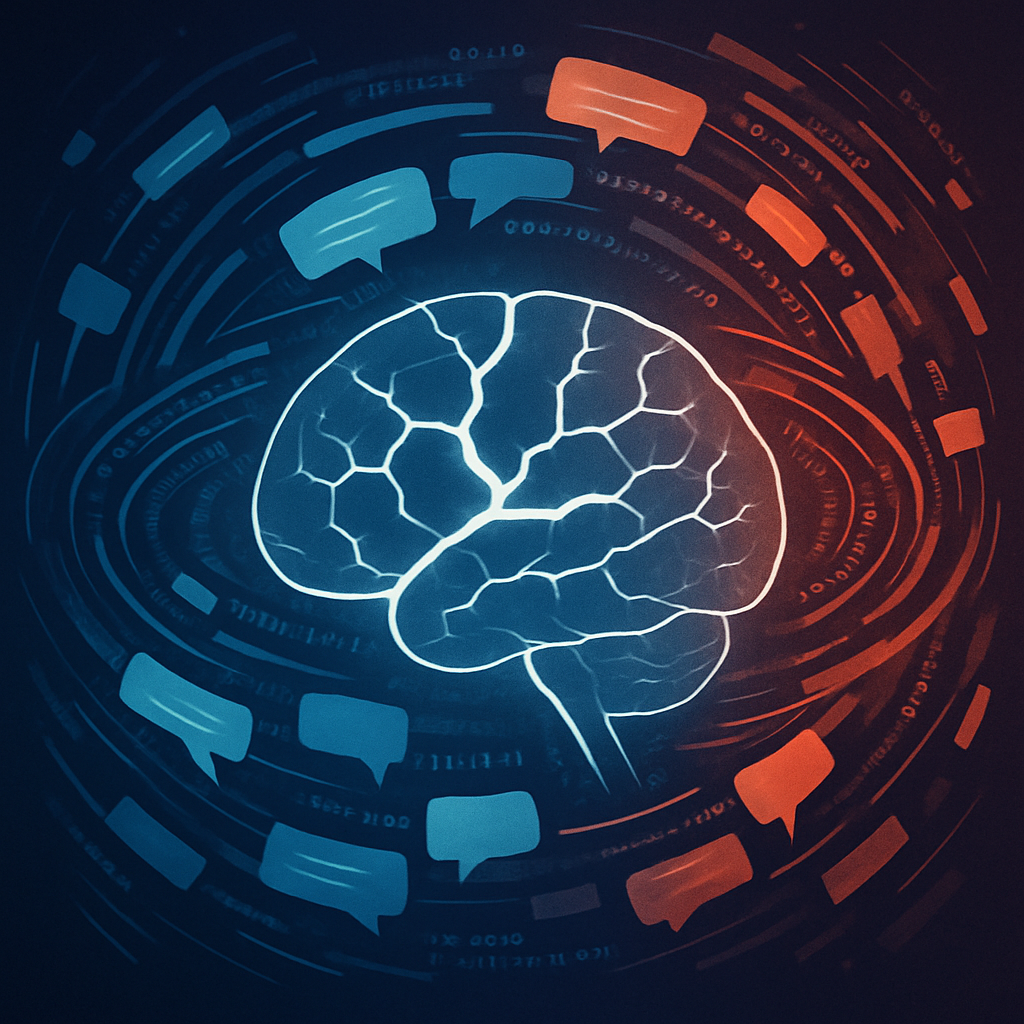
This is the Certainty Trap: a modern pattern where a tired mind prefers clear, quick answers over complex, truthful ones. And it’s becoming one of the hidden engines behind misinformation.
1. Fragmented Attention Creates a Hunger for Quick Closure
Modern life celebrates multitasking, but the brain doesn’t actually multitask. It switches rapidly, constantly, exhaustingly between tasks.
Every switch comes with a cognitive cost:
Working memory drains
Comprehension drops
Errors increase
Focus becomes harder to sustain
When this becomes the daily rhythm, something subtle happens:
The brain begins to prefer information that doesn’t require effort.
Ambiguity feels uncomfortable.
Nuance feels slow.
Complexity feels like friction.
Quick certainty, even if it’s wrong, feels like relief.
The more fragmented our attention becomes, the more we crave the soothing simplicity of definite answers.
2. Shallow Processing Makes Sound Bites Feel Like Understanding
Digital environments reward speed and novelty. As a result, the brain adapts to process information horizontally (wide and shallow) rather than vertically (slow and deep).
Shallow processing creates two illusions:
The Illusion of Knowledge
A headline or post feels accurate because it delivers a bite-sized sense of completion.
The Illusion of Truth
Familiarity becomes a proxy for accuracy: “I’ve seen it everywhere, it must be true.”
This is where misinformation grows effortlessly. A confident, simple claim can feel more trustworthy than a complex, nuanced explanation.
3. Emotional Shallowing Lowers Our Defenses
Attention drives emotion
Constant interruptions don’t just scatter our focus; they scatter our emotions. Each time attention shifts, the emotional response that was forming gets reset, leaving feelings shallow and incomplete before the next stimulus takes over.
This leads to a pattern of emotional shallowing where:
Feelings move quickly
Reactions intensify
Empathy fatigues
Nuance is harder to tolerate
A shallow emotional state is more reactive, more suggestible, and more likely to reach for quick explanations that provide instant certainty. This matters because misinformation isn’t designed to inform; it’s designed to trigger. A tired or overstimulated brain follows the emotional shortcut every time.
4. How Fragmentation Fuels the Spread of Misinformation
Misinformation spreads not because people lack intelligence, but because fragmented attention creates the perfect psychological storm:
The brain feels overwhelmed → seeks simplicity.
The feed is fast → offers instant opinions.
The mind is tired → accepts what feels familiar.
Emotion is shallow → reacts without reflection.
And when everything online is competing for attention, the content that spreads fastest is the content that hits the brain’s shortcuts:
certainty
novelty
outrage
identity cues
emotional punch
The challenge isn’t that people believe the wrong things; it’s that they are too overloaded to think deeply about any of them.
5. How the Certainty Trap Changes Critical Thinking
Critical thinking requires sustained attention. It requires staying with the question long enough to:
consider alternatives
seek evidence
tolerate ambiguity
examine assumptions
reflect on emotion
Fragmentation erodes all of that.
It creates a subtle restlessness that makes even small moments of uncertainty feel uncomfortable. In that discomfort, the brain often grabs the nearest conclusion, and not because it’s well-reasoned, but because it’s fast. This is what the attention economy exploits. It’s one reason conspiracy theories, polarized narratives, and oversimplified explanations feel magnetic and gain so much traction.
This is how premature certainty replaces thinking.
6. Why Outsourcing Thinking to AI Deepens the Certainty Trap (If We’re Not Careful)
AI tools can synthesize, summarize, and generate information at extraordinary speed. Used well, they can support learning, reflection, and problem-solving. But used passively, they introduce a new cognitive shortcut: the illusion that the machine’s output is understanding.
When attention is already fragmented, AI can unintentionally reinforce shallow processing in several ways:
It provides quick, confident answers that feel authoritative.
It eliminates the discomfort of wrestling with uncertainty.
It reduces the need to examine assumptions or follow the reasoning process.
It transforms inquiry into consumption rather than engagement.
The danger is not the technology itself. It is the temptation to let AI replace the cognitive struggle that deep thinking requires.
When we rely on instant answers, whether from feeds, headlines, or models, we erode the skills that allow us to evaluate those answers in the first place.
AI becomes part of the Certainty Trap when it turns complexity into output without requiring us to engage in the slow, iterative work of understanding.
Used deliberately, however, AI can do the opposite: it can augment depth by offloading surface-level tasks and freeing attention for analysis, reflection, and interpretation. The key is not to let the tool do our thinking, but to use it to support the thinking we still must do ourselves.
7. Rebuilding Depth: A Path Out of the Certainty Trap
What strategies can individuals use to combat the effects of fragmented attention on their thinking? How can we differentiate between credible information and misinformation in a fast-paced digital environment? What role can education play in fostering deeper critical thinking skills to counter the Certainty Trap?
The remedy is not avoidance or rigid restriction. It requires deliberate structure, predictable cognitive rhythms, and a return to the attentional conditions that support depth, analytical reasoning, and meaningful comprehension.
Here are a few starting points:
1. Deep Focus Sprints
Short, device-free intervals (even 5–10 minutes) retrain the attention system to tolerate stillness.
2. The Second Question
After hearing a claim, ask: “What’s the evidence behind this?”
This interrupts certainty and reopens thinking.
3. Slow Reading
Not skimming. Not scrolling. Slow, intentional reading restores cognitive depth and strengthens comprehension.
4. Emotional Check-Ins
Ask: “Why does this feel true to me?” Often, certainty is a feeling before it is a belief.
5. Digital Recess
Intentional breaks reset the reward system and reduce novelty-seeking.
6. Ambiguity Practice
Let the statement “I’m not sure yet” be a full sentence.
This builds the mental tolerance required for critical thought.
7. AI as a Thinking Partner (Not a Shortcut)
Use AI intentionally to expand your thinking rather than replace it. Once a week, choose a topic you’re exploring, such as an article, claim, or idea, and prompt AI to reveal perspectives you may have overlooked.
Try asking: “What are three well-reasoned counterarguments to this claim, and what evidence supports them?” or “What assumptions might I be missing?”
Closing Reflection: Certainty Is Comfortable, Not Correct
We live in an era in which information circulates faster than reflection, and attention has become one of the most contested cognitive resources.
The Certainty Trap is not a personal deficit; it is a predictable consequence of sustained cognitive load and environmental overstimulation.
Yet recognizing this pattern creates the possibility of stepping outside it.
We can decelerate.
We can engage with questions more deliberately.
We can rebuild our capacity for depth, reflection, and nuance.
Because the objective is to cultivate understanding, not to achieve immediate certainty, and understanding requires time, attentional stability, and the willingness to pause long enough for thought to consolidate.