
Jason Daniels Jason Daniels

Are Children’s Social Skills Disappearing?

Are children losing their social skills—or are they getting fewer chances to practice them?
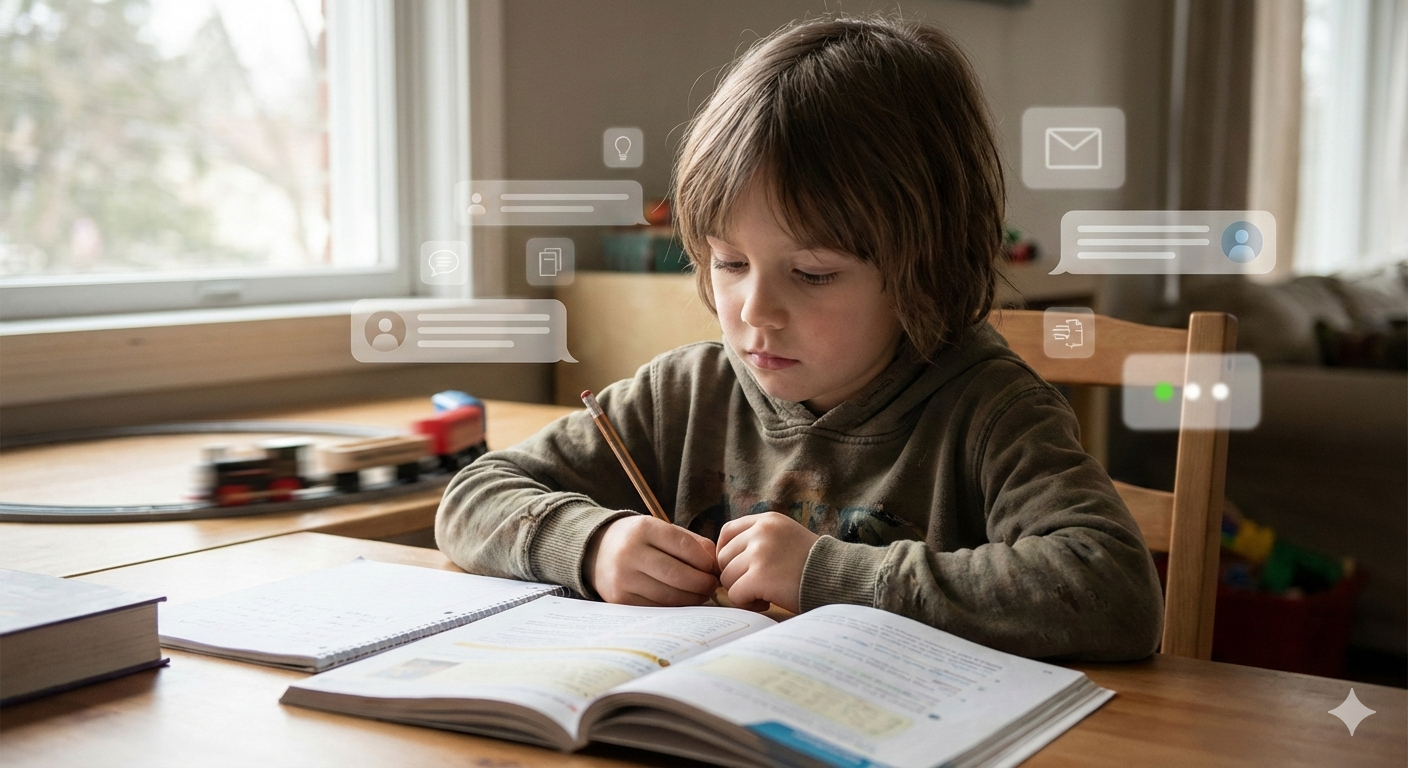
Social skills don’t disappear. They develop, or stall, based on experience. In a world where discomfort is easier to avoid and interaction is increasingly mediated by screens, many children are simply under-practiced. This article explains what developmental psychology tells us about social learning, why the real change is practice rather than capacity, and how parents and educators can support social growth at every age.
Why the Real Change Is Practice, Not Capacity

One of the most common concerns I hear from parents, teachers, and clinicians right now is that many children and adolescents are struggling socially.

Some fear that children are losing social skills altogether. But before we assume that social ability is disappearing, it’s worth asking a more precise developmental question: What kinds of social experiences are children getting to practice?

Social Skills Are Central to Human Development

Long before schools, writing, or technology, human survival depended on cooperation, trust, emotional attunement, and the ability to read others accurately. Our ancestors needed to detect threats, infer intent, and coordinate action within small, interdependent groups.

Our brains didn’t evolve primarily to solve abstract problems; they evolved to read people.

Social cognition, or interpreting facial expressions, tone of voice, posture, and emotional shifts, is foundational to how humans navigate the world. And like any complex system, it develops through experience.

Reading Faces Comes Before Reading Words

One of the earliest and most powerful human abilities is reading emotion from faces.

Infants don’t need language to understand emotional meaning. Through a process known as social referencing, babies look to caregivers’ facial expressions to decide how to interpret unfamiliar situations. Is this safe? Is this dangerous? Is this something to approach or avoid?

Across thousands of these moments, children learn how emotions work, including how they appear, change, and resolve.

These early experiences are supported by secure attachment. When caregivers provide consistent emotional signals and predictable responses, and when children feel safe to explore the world both physically and socially, children learn that emotions, even uncomfortable ones, are manageable. This supports emotional calibration, empathy, and social confidence.

Social Interaction Has Always Included Uncomfortable Situations

Face-to-face interaction often includes uncertainty, silence, missteps, and emotional risk. These moments are not developmental failures. They are the training ground for developing social skills.

I sometimes joke that my kids will never know the sheer terror of calling a girl’s house and having to talk to her father before I could talk to her. And it really was terrifying. You assumed the person on the other end of the line didn’t like you. Your voice tightened. You rehearsed what you were going to say. You stumbled through it anyway. And you stayed on the line because hanging up wasn’t really an option.

What mattered developmentally wasn’t the phone call itself. It was what the situation demanded. You had to tolerate discomfort. You had to read tone and pacing. You had to respond respectfully to someone who wasn’t particularly warm. You had to regulate your nerves and continue the interaction anyway.

That wasn’t just an awkward experience; it was social practice.

The same principle applies to emotionally difficult moments in adolescence.

Breaking up with someone face-to-face forces you to witness disappointment, sadness, or anger in real time. You have to manage your own emotions while responding to someone else’s. You have to repair, clarify, or at least sit with the impact of your words.

Breaking up by text or online changes that experience. It is faster. It is cleaner. And it is far less uncomfortable. But it also removes a powerful learning opportunity, the chance to stay present with another person’s emotional response.

In situations like this, the developmental cost comes from reduced emotional exposure. When discomfort is avoided, the nervous system learns less about tolerance, repair, and emotional accountability. But this is only part of the picture. In some cases, social learning is reduced because emotionally difficult interactions are avoided altogether. In other cases, even when children and adolescents do engage socially through screens, the nature of that interaction changes in another important way.

When Emotional Cues Disappear, Cognitive Load Increases

When social interaction is mediated through screens, it doesn’t become simpler; it becomes cognitively harder.

In face-to-face interaction, emotional understanding happens quickly and largely automatically. Facial expressions, tone, timing, and posture work together to guide interpretation. The brain integrates these cues with little conscious effort.

When those cues are missing, however, the brain has to work harder.

Instead of reading emotion directly, children and adolescents are forced to infer it. That inference increases cognitive load, pulling mental resources away from things like emotional regulation, perspective-taking, and thoughtful responses.

When cognitive load rises, misinterpretation becomes more likely. Ambiguity is often read as rejection or threat, especially in young people whose executive control systems are still developing. Social interaction can begin to feel exhausting, confusing, or risky because the cognitive load of interpretation has increased.

Are Kids Losing the Ability to Read Emotions?

Some emerging research suggests that children and adolescents may show reduced accuracy in reading subtle facial emotions, particularly when social interaction is limited or heavily mediated. Post-pandemic cohorts, in particular, appear to show slower recovery in social-emotional comfort during unstructured, face-to-face interaction. This doesn’t mean children are losing the capacity to read emotions; rather, it suggests they may be getting fewer opportunities to calibrate that ability through repeated, embodied social experience. The capacity remains. What’s missing is consistent practice.

Why This Feels Like a Social Skills Crisis

Social skills develop through repeated exposure to social situations and to manageable discomfort. When children and adolescents constantly avoid uncomfortable social situations (either by escaping or parents jumping in), the nervous system learns that relief comes from escape and avoidance rather than endurance. Social situations begin to feel more threatening, not because they are objectively harder, but because the system has had fewer chances to adapt and has learned that avoidance is easier.

Supporting Social Skill Development at Different Ages

Because social development unfolds in tandem with brain development, support must be age-appropriate. The goal at every stage is the same: help children stay socially engaged through manageable discomfort, without overwhelming them or removing the challenge entirely.

Early Childhood (Ages 3–6): Learning Through Co-Regulation

At this stage, children are just beginning to interpret emotions, manage impulses, and stay engaged when interaction feels uncertain.

Helpful supports:

  • Stay physically nearby during social play
    Presence provides regulation without direct interference.

  • Narrate emotions and intentions
    “She looks surprised.”
    “He’s waiting for a turn.”

  • Normalize short social bursts
    Parallel play and brief interactions are developmentally appropriate.

  • Model repair immediately
    “That didn’t work. Let’s try again.”

What matters most at this age isn’t smooth interaction; it’s exposure to emotional signals in a safe context.

Middle Childhood (Ages 7–11): Practicing Staying With Discomfort

This is when social comparison increases, and mistakes start to feel more personal.

Helpful supports:

  • Preview social situations
    Explain what might happen and where discomfort might show up.

  • Encourage staying slightly past the urge to quit
    “Try one more minute.”

  • Avoid solving social problems too quickly
    Ask, “What do you think you could try next?”

  • Praise effort and recovery
    Not popularity or ease.

Children at this age are starting to build tolerance for awkwardness, frustration, and uncertainty. That tolerance supports later confidence.

Early Adolescence (Ages 12–14): Reducing Pressure While Increasing Exposure

During this period, social awareness intensifies, but emotional regulation is still developing. This makes social situations feel high-risk.

Helpful supports:

  • Lower the stakes
    Small groups are better than large ones.

  • Validate discomfort without endorsing avoidance
    “Being nervous about this [experience] makes sense, and you can handle it.”

  • Encourage face-to-face interaction in predictable settings
    Shared activities reduce conversational pressure.

  • Teach repair explicitly
    Adolescents often assume mistakes are permanent.

At this stage, social withdrawal is often protective, not oppositional. The task is to keep exposure possible, not forceful.

Later Adolescence (Ages 15–18): Supporting Autonomy and Emotional Accountability

Older adolescents have more independence but still benefit from scaffolding.

Helpful supports:

  • Discuss the difference between comfort and growth
    Help them reflect on when avoidance feels good but limits development and growth.

  • Encourage difficult conversations in person when possible
    Especially for conflict, apology, or repair.

  • Talk openly about digital communication limits
    Text is efficient, but emotionally incomplete.

  • Model respectful disagreement and emotional ownership

This is where social skills become less about learning how to interact and more about learning when and why to stay engaged.

Across All Ages: What Matters Most

Regardless of age, social development is supported when adults:

  • tolerate awkwardness

  • resist over-rescuing

  • normalize emotional discomfort

  • model repair

  • protect opportunities for face-to-face interaction

For readers who want a quick reference, I’ve put together a one-page summary that outlines these age-based supports in a simple visual format. You can download it here.

Social confidence doesn’t come from avoiding hard moments; it comes from discovering, repeatedly, that hard moments are survivable. 

Social skills are not disappearing, but the conditions for practicing them have changed. With the right support, however, those skills can grow again because they are a key part of human evolution and are deeply ingrained in each of us.


Read More
Jason Daniels Jason Daniels

Kids Aren’t Losing Their Attention. They’re Getting Practice at Switching

Many parents and educators worry that children are losing their ability to focus. This article explains why attention isn’t disappearing, but adapting. Drawing on developmental psychology and cognitive science, it shows how modern environments train the brain for rapid switching rather than sustained attention — and how focus can be rebuilt through practice, not pressure.

Why Focus Is a Skill Children Can Build

One of the things I hear most often when I talk to parents and teachers is that kids don’t seem to have the capacity for sustained attention anymore.

Whether it is in classrooms, during homework, or even in conversation, many adults describe the same pattern. Kids drift quickly, lose interest faster, and seem uncomfortable staying with one thing for very long.

When we see this happening everywhere, it’s tempting to reach for a simple explanation. That’s where the familiar claim comes in: that humans now have a shorter attention span than a goldfish. Repeated often enough, it starts to sound like settled science.

It isn’t.

There is no scientific evidence showing that human attention spans have collapsed below those of a goldfish. The comparison itself does not really make sense. Attention span is not a single fixed number. It varies depending on context, motivation, emotional state, and developmental stage.

What has changed is not children’s brains.

Children today are born with the same core attention systems kids have always had. What is different is the environment those systems are developing in.

Modern childhood is filled with constant cues, rapid feedback, and endless opportunities to switch. In response, the brain adapts. Not by losing attention, but by becoming faster, more reactive, and more practiced at shifting focus.

That adaptation can look like poor attention in settings that require staying with one thing.

This is not a story about broken brains or declining children.
It is a story about practice.

And to understand what children are practicing now, we need to look at how the developing brain allocates attention.

Attention, Executive Control, and Limited Resources

Part of what supports sustained attention is something psychologists refer to as executive control.

Executive control is not about trying harder or having more discipline. It refers to the brain’s ability to allocate limited attentional resources in line with a goal, especially when there are competing demands for attention.

Research on sustained attention shows that even adults experience measurable declines in vigilance and executive control within roughly 10–15 minutes without some form of cognitive refresh. Attention does not disappear, but the capacity to sustain top-down control weakens unless the system is periodically reset.

Expecting children and adolescents to maintain continuous focus for long stretches without breaks ignores how attention actually works, especially in environments filled with competing cues.

In children and adolescents, these systems are still developing. They strengthen gradually over time and are highly sensitive to context. When the environment is filled with frequent cues, rapid feedback, and constant opportunities to switch, attentional resources are more likely to be pulled outward rather than maintained through executive regulation.

This means that when children struggle to stay focused, it is not always because they lack motivation or capacity. Often, it is because their attentional resources are being continually reallocated in response to what the environment is asking them to notice next.

The Developing Brain Was Built to Notice Change

Children’s brains are especially responsive to novelty.

From a developmental perspective, this makes sense. Young brains are designed to explore, notice differences, and update quickly based on new information. That is how learning happens.

But modern environments surround children with rapid novelty and frequent cues such as:

  • notifications

  • fast-paced media

  • endless options

  • quick feedback

Instead of getting frequent practice sustaining attention, many children get far more practice shifting it, and, over time, the brain adapts to what it repeatedly experiences.

Attention does not disappear. Control over attention shifts, becoming more reactive to external cues and less able to stay anchored when multiple demands compete for limited resources.

Focus Is Built Through Experience, Not Personality.

We often talk about attention as something children either “have” or “don’t have.”

But attention is not a single ability. It includes getting started, staying with something, shifting when needed, and returning after distraction. Many of these abilities can strengthen over time when children are given consistent opportunities to practice them in supportive conditions.

Just like muscles develop through repeated use, the ability to sustain attention develops when children regularly practice:

  • staying with a task past the initial excitement

  • working through confusion

  • tolerating boredom

  • persisting through frustration

When those opportunities are rare or constantly interrupted, attention can look weak even when a child’s underlying capacity is intact.

Why Focus Is Also an Emotional Skill

Sustained attention is not only cognitive.
It is emotional and physiological.

For kids, staying focused often means staying with feelings like:

  • uncertainty (“I’m not sure how to do this.”)

  • frustration (“This is hard.”)

  • boredom (“This isn’t exciting anymore.”)

  • self-doubt (“I’m not good at this.”)

When those feelings rise, the nervous system looks for relief. Switching tasks, grabbing a device, or disengaging reduces discomfort quickly, and the brain learns that switching works.

So when a child loses focus, it is not automatically laziness or defiance.

Often, it is emotional self-regulation. Discomfort rises, and attentional resources are reallocated as the brain reaches for relief.

Why Attention Span Feels Shorter Than It Is

If attention were a muscle, many children are training it for speed rather than for staying power. They become skilled at rapid shifts, scanning, multitasking, and responding quickly to stimulation. What they practice far less is remaining. Staying after novelty fades, after effort is required, after mistakes happen.

That is why focus can feel fragile. Not because the system is weak, but because it is being trained for something else.


Not because children cannot concentrate, but because sustained concentration requires conditions and repeated practice that are harder to find in a high-interruption world.

In today’s environments, the problem is not that children can’t focus. It’s that they are practicing a different kind of attention.

The Consequences Are Real. Even If They Are Not Permanent.

It is important to say this clearly.

The effects of chronic attentional fragmentation are not irreversible, but they are not harmless either.

Attention supports learning, emotional regulation, and social understanding. When children have fewer opportunities to practice sustained attention, there can be real downstream effects during development.

Research links reduced sustained attention to:

  • greater difficulty with academic learning that requires persistence

  • lower frustration tolerance

  • challenges with planning and follow-through

  • increased emotional reactivity when tasks feel demanding

These patterns do not mean a child is damaged or incapable.
They mean the brain has adapted to an environment that rewards speed and switching more than staying.

Development always involves trade-offs.

What we practice most becomes what we are best at.

The encouraging part is that the developing brain remains highly plastic. With the right conditions, support, and repeated experiences, the capacity for sustained attention can strengthen over time.

But that growth does not happen automatically.


It requires intentional practice.

Practical Ways to Support Sustained Attention

These are not quick fixes. Think of them as attention practice, not attention control.

1. Shrink the Time Window

Sustained attention grows through successful cycles, not long stretches.

Start with focus periods that the nervous system can realistically sustain, then pair them with brief, intentional resets.

Young children
Focus: 3–7 minutes
Refresh: 1–2 minutes
Reset ideas: movement, stretching, breathing, visual rest

Elementary-aged children
Focus: 8–15 minutes
Refresh: 2–3 minutes
Reset ideas: walking for water, posture reset, tidying the workspace

Adolescents
Focus: 15–25 minutes
Refresh: 3–5 minutes
Reset ideas: standing, short walks, brief reflection

Short, successful cycles build confidence.
Overextended demands build avoidance.

2. Make the End Visible

Attention is easier to sustain when the brain knows relief is coming.

Uncertainty increases stress and accelerates disengagement. Predictability supports regulation.

Use timers to externalize time.
Preview breaks before starting.
Say, “When this is done, we’ll stop.”

Clear endings reduce nervous system load.

3. Don’t Rescue Too Quickly

Executive control strengthens in moments of manageable difficulty.

When frustration appears, the instinct is often to remove the task. Instead:

Name the feeling.
Stay nearby.
Encourage one more attempt before switching.

This is where sustained control develops.

4. Reduce Competing Signals

Attention is a limited resource that responds to the environment.

When cues multiply, control weakens.

Silence non-essential notifications.
Close extra tabs.
Keep devices out of sight during focus periods.

This isn’t punishment.
It’s environmental support.

5. Model What Staying Looks Like

Children learn how attention works by watching adults.

Let them see you read, write, or work without constant switching.
Narrate effort, pauses, and persistence.

What’s modeled becomes normalized.

6. Praise Return, Not Perfection

Sustained attention is built through recovery, not uninterrupted focus.

Instead of praising “good focus,” praise returning.

“You noticed you were distracted and came back.”
“That was a good restart.”

Returning is the skill.

7. Build in Real Rest

Capacity grows through recovery.

Movement
Outdoor time
Unstructured play
Device-free downtime

Rest supports attention.
It doesn’t compete with it.

The Skill That Matters Most

In a world that constantly pulls attention away, the most important skill children can learn is not flawless concentration.

It is the ability to notice when attention drifts and gently bring it back.

Again.
And again.
And again.

Not because children’s brains are broken,
but because the environment has changed.

And attention, like any skill, develops through practice.


Read More