Jason Daniels Jason Daniels

Why Digital Comparison Hits Kids So Hard

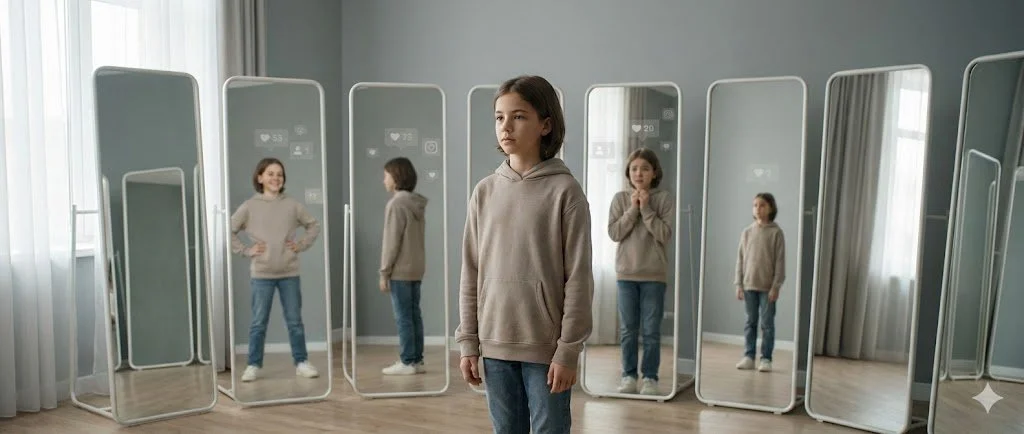
Today’s kids aren’t just comparing themselves to classmates, they’re measuring themselves against thousands of curated, filtered, and algorithmically amplified “peers.” The result is a subtle but powerful shift in how young people evaluate themselves, their progress, and their worth. This post explains why digital comparison hits kids so hard, what educators and parents are seeing, and how to help children rebuild a more grounded, resilient sense of self.

Digital life has always been described in terms of distraction, attention, or screen time. But a different psychological shift is happening under the surface, one that parents and educators are noticing even before they have the language for it.

More students hesitate to begin tasks they are capable of.
More teens downplay their own progress when it is objectively solid.
More children express worry that others are “ahead,” even when their development is exactly where it should be.
And many educators report an increase in students who seem discouraged by normal challenges or typical rates of improvement.

These patterns suggest a deeper shift in how young people evaluate themselves and how they measure where they stand. In a world saturated with curated lives and algorithmic contrast, internal standards have become harder for them to maintain.

The New Comparison Landscape

Comparison is not a flaw in human psychology; it is one of our oldest evolutionary adaptations. We evolved to evaluate ourselves within small communities where comparisons were limited, gradual, and grounded in lived experience. But today, young people are exposed to thousands of comparison points every day: academic, social, physical, creative, athletic, and aesthetic.

The scale alone changes the psychology.

Comparison used to serve as a simple calibration tool, a way of asking, “Am I on track?” Today, it has become a persistent source of inadequacy.

The question is no longer “How am I doing?”
It becomes “Why am I not doing better?”

The Psychology of Comparison: A Built-In System Under Strain

Psychologist Leon Festinger’s Social Comparison Theory explains that humans evaluate themselves by observing others. This was adaptive when social groups were small and relatively uniform. But our brains did not evolve for a world where we can compare ourselves to thousands of people who appear more successful, more attractive, more accomplished, or more socially connected.

Digital environments overload a comparison circuit designed for face-to-face, small-group living.

When comparison cues multiply faster than our ability to process them, the result is:

  • constant self-monitoring

  • chronic dissatisfaction

  • difficulty recognizing real progress

  • loss of intrinsic motivation

Kids, especially, are vulnerable to the effects of this global highlight reel when evaluating local progress.

Upward Comparison: Why Digital Feeds Skew Negative

On social platforms, people rarely show ordinary moments. Instead, they display:

  • achievements

  • curated bodies

  • filtered faces

  • milestones

  • polished routines

  • highlight reels

Research consistently shows that upward comparison, comparing ourselves to someone “doing better,” is the most common type of comparison online.

Upward comparison is intensified online because digital platforms surface peak achievements, idealized images, and curated successes. For adolescents, this comparison is particularly powerful; their reward systems are highly sensitive to social feedback, and their sense of competence is still consolidating.

In practice, a teenager is not comparing themselves to the small group of peers they see daily.
They are simultaneously comparing themselves to the top performers in every domain of life.

From this, a consistent pattern emerges:

  • lowered mood

  • increased self-criticism

  • distorted expectations

  • heightened academic pressure

  • social anxiety

  • reduced satisfaction with one’s own life

Algorithmic Amplification: Why Comparison Is Unavoidable

If humans were simply comparing themselves to people online, the psychological effects would be significant but manageable. What changes everything is the role of algorithms.

Algorithms do not show a representative sample of life. They show what drives engagement: the most extreme, polished, emotionally charged, or aspirational content.

This means that digital environments:

  • magnify contrast

  • intensify upward comparison

  • reduce exposure to normal, average, or realistic peers

The algorithm becomes a comparison accelerator, turning natural social evaluation into a constant and exaggerated cognitive load that developing minds interpret as truth.

Self-Discrepancy Theory: The Expanding Gap Between Selves

Psychologist E. Tory Higgins described three important versions of the self:

  • Actual self: the attributes you believe you possess

  • Ideal self: the attributes you wish you possessed (hopes and aspirations)

  • Ought self: the attributes you believe you should possess (duties and obligations)

Digital contrast widens the gap between these selves dramatically.

The more idealized content kids see, the more impossible their ideal self becomes.
The more polished peer achievements they observe, the heavier the ought self feels.
The more they compare their ordinary lives to curated feeds, the smaller the actual self seems.

This widening gap produces:

  • anxiety

  • shame

  • avoidance

  • perfectionism

  • reduced motivation

  • emotional exhaustion

Kids feel as though they are constantly falling short of an invisible standard.

Competence and Motivation: How Comparison Erodes Self-Belief

Self-efficacy, as Bandura described, is the belief in one’s ability to succeed. It is built through mastery, practice, and real progress.

Comparison disrupts this mechanism.

When kids see peers, or even strangers online, who appear far ahead of them academically, socially, physically, or creatively, their sense of expectancy begins to erode. Expectancy is the belief that “I can improve,” and it is one of the strongest predictors of motivation.

But comparison affects more than expectancy. It also affects value, the belief that something is worth doing. Expectancy–Value Theory shows that children are motivated when they believe they can succeed and believe the task matters.

Digital comparison distorts both.

When expectancy falls, kids think:

  • “I’ll never catch up.”

  • “Everyone else is already better.”

  • “Why try if I’m so far behind?”

When value falls, kids think:

  • “Even if I improve, it won’t matter.”

  • “My accomplishments are tiny compared to theirs.”

  • “This doesn’t feel meaningful anymore.”

Together, lowered expectancy and lowered value lead to:

  • Lower persistence: Normal difficulty feels like proof of inadequacy, so kids give up sooner.

  • Fear of failure: Comparison raises the stakes of making mistakes. Kids avoid risks because a misstep feels like public confirmation that they are “behind.”

  • Avoidance of challenges: Tasks that once felt appropriately difficult now feel threatening. If success seems unlikely, it becomes safer not to try at all.

  • Decreased willingness to try new things: New activities require vulnerability and a beginner mindset. In a comparison-saturated environment, kids worry that being “bad at first” will make the gap feel even wider

  • “What’s the point?” thinking: When both expectancy (“Can I do this?”) and value (“Is this worth it?”) fall, motivation collapses. The effort required feels too high, and the potential reward feels too small.

Kids stop trying not because they lack potential, but because the digital comparison landscape makes their efforts feel small, slow, or insignificant. The very systems that once built competence now undermine it by continuously resetting expectations to unrealistic levels.

The Comparison Loop: A Habit the Brain Learns

With enough repetition, comparison becomes automatic. Kids and adults begin:

  • checking feeds reflexively

  • evaluating themselves before posting

  • adjusting behavior based on imagined reactions

  • scanning for rank rather than connection

Over time, the mind becomes comparison-oriented, a cognitive habit that influences self-worth even offline.

This is not an identity shift; it is a thinking style shift.

And it is one that digital environments reinforce every day.

AI and the Comparison Multiplier

AI-enhanced imagery and generative content escalate comparison further. Where social media once showed curated lives, AI now shows impossible ones:

  • flawless skin

  • perfect symmetry

  • aesthetic routines

  • optimized daily schedules

  • unrealistic productivity

  • idealized bodies

These are not just unrealistic. They are unhuman.

The result is a widening self-discrepancy gap and a tightening comparison loop.

AI does for standards what algorithms did for visibility:
It pushes them past the threshold of what is achievable.

What Parents and Educators Are Seeing

The Comparison Effect shows up long before kids can explain what they are feeling. Adults often notice patterns like these:

  • Students feeling “behind” academically
    Even when their performance matches developmental expectations, students compare themselves to top-performing peers or polished content online, leading to unnecessary stress and self-doubt.

  • Teens are reluctant to try new things
    Trying something new requires being a beginner, but comparison makes “starting from zero” feel embarrassing or risky. Teens avoid new activities to protect their self-image.

  • Increased perfectionism and meltdown cycles
    When the internal standard is impossible to meet, even small imperfections can feel like failures. This often leads to frustration, emotional overload, or abandoning the task entirely.

  • Preoccupation with peer performance
    Students frequently monitor what classmates achieve, grades, sports results, and social milestones,  and use these as benchmarks for their own worth or progress.

  • Anxiety around posting or participating
    The fear of judgment grows when kids expect their performance to be compared or evaluated instantly, whether in class discussions, group work, or online spaces.

  • More quitting before starting
    If effort seems unlikely to “catch up” to the perceived level of others, students disengage early to avoid the discomfort of feeling behind.

  • Chronic discouragement
    Continual upward comparison erodes confidence. Kids who once showed enthusiasm begin to anticipate disappointment before they even begin.

  • Difficulty accepting “good enough.”
    When the comparison field is filled with ideal outcomes, anything short of perfection feels inadequate. Kids struggle to recognize healthy progress or reasonable expectations.

These patterns are not failures of character. They are predictable responses to environments that distort evaluation, amplify contrast, and make ordinary progress feel inadequate.

Recalibrating the Mind: The Four R’s of Healthier Comparison

The goal is not to eliminate comparison entirely. Comparison can motivate, orient, and guide us when it is grounded in reality. The challenge is helping young people regulate how often they compare, what they compare to, and how they interpret contrast.

These four practices can help recalibrate the comparison system so it becomes supportive rather than overwhelming.

1. Reduce

Lower the volume of comparison inputs.

  • Unfollow accounts that consistently trigger self-doubt or inadequacy.
    Many comparison spirals begin with a small number of highly curated or extreme exemplars.

  • Move high-use apps off the home screen.
    Even one extra tap reduces reflexive checking and lowers automatic comparison loops.

  • Disable “suggested” or algorithm-driven feeds when possible.
    Algorithmic content disproportionately features idealized routines, achievements, or aesthetics, which tend to be the most potent comparison triggers.

  • Limit exposure to extreme outliers.
    Kids don’t need constant visibility of the “top 1%” of any domain; it distorts what typical progress looks like.

Reducing input creates cognitive space for more accurate self-evaluation.

2. Replace

Substitute comparison triggers with healthier reference points.

  • Follow creators who show process, not just outcomes.
    Seeing practice, mistakes, and gradual growth provides more realistic models of progress.

  • Seek out “real day in the life” content.
    These depictions often show routines, setbacks, downtime, and normal variability.

  • Encourage peer comparison based on effort or improvement, not rank.
    “Who improved?” is a healthier metric than “Who is best?”

  • Use progress journals instead of performance metrics.
    Tracking one’s own growth reduces the tendency to measure success against others.

Replacing unrealistic standards with grounded, human examples reshapes how contrast is interpreted.

3. Recalibrate

Realign internal standards with reality rather than digital exaggeration.

  • Spend regular time in unfiltered environments.
    Grocery stores, parks, classrooms, community events, anywhere where real diversity in appearance, ability, and behavior is visible.

  • Discuss curation openly at home or school.
    Kids benefit enormously when adults explain that online content is selective, edited, and strategically presented.

  • Normalize imperfection and slow progress.
    Many children have never seen adults struggle through something difficult. Seeing authentic effort recalibrates expectations.

  • Celebrate small wins that aren’t visible online.
    Consistency, problem-solving, kindness, and persistence rarely make it into social feeds but matter deeply for development.

Recalibration restores a realistic sense of what “normal” looks and feels like.

4. Rebuild

Strengthen the internal systems that counteract comparison pressure.

  • Focus on mastery through hands-on tasks.
    Cooking, building, learning an instrument, or sports practice give kids tangible evidence of improvement.

  • Break goals into manageable steps.
    When progress is visible and achievable, expectancy rises, and comparison loses its power.

  • Help kids track their own improvement over time.
    Self-referenced progress reduces the influence of external benchmarks.

  • Reinforce self-efficacy by praising effort, strategy, and persistence.
    This shifts motivation away from external comparison and toward internal competence.

Rebuilding gives young people the psychological tools to evaluate themselves accurately, even in comparison-heavy environments.

Practical Tools for Parents and Educators

These strategies help shift evaluation from external comparison to internal growth. They work in classrooms, families, counseling settings, and extracurricular programs.

Try introducing:

A weekly comparison audit.

Invite kids to reflect on the moments during the week when they felt behind or inadequate.

Prompts might include:

  • “When did I compare myself to someone else?”

  • “What triggered it?”

  • “Was the comparison realistic or curated?”

  • “What would be a fairer benchmark?”

This builds awareness of comparison patterns and helps students interrupt automatic self-judgment.

Classroom discussions about curated content

Use age-appropriate examples of edited photos, highlight reels, AI-altered images, or exaggerated success stories.

Discuss with students:

  • What gets posted vs. what doesn’t

  • How algorithms amplify extreme examples

  • The difference between process and performance

  • How to spot unrealistic portrayals

These conversations normalize the idea that online content is selective, not representative.

Peer circles that share progress, not performance

Structure small groups where students talk about what they worked on, what felt challenging, and what improved, and not who got the highest score or best result.

This emphasizes:

  • effort

  • learning curves

  • persistence

  • strategies that worked

It replaces rank-based comparison with collaborative growth.

Reflective prompts such as “What did you get better at this week?”

A simple five-minute routine that helps kids notice their own improvement.

Other effective prompts:

  • “What was one small win?”

  • “What challenged me and how did I respond?”

  • “Where did I see progress I might have missed?”

  • “What am I proud of that no one else sees?”

This strengthens internal evaluation and counters “I’m behind” thinking.

Strength mapping exercises

Have students identify and track their strengths over time.

Examples:

  • creating a personal “strength profile”

  • mapping strengths to new challenges (“How could patience help me with math?”)

  • updating strengths quarterly to show growth

Strength mapping builds self-awareness and expands the range of qualities students value in themselves.

“Good enough” routines that counter perfectionism

Establish small practices that normalize imperfection and reduce pressure.

Examples:

  • “first draft Fridays” where drafts are shared even when imperfect

  • “messy minutes” where students try something new with no expectation of success

  • teachers modeling unfinished work and talking about their own learning process

  • families celebrating effort-based achievements at dinner

This helps kids see that progress, not perfection, is the goal.

A Return to Intrinsic Standards

The Comparison Effect is not about identity loss. It is about evaluation overload. When young people are exposed to more contrast than the developing mind can process, self-worth becomes reactive, unstable, and externally defined.

But comparison is not the enemy. Unregulated comparison is.

With awareness, structure, and intentional habits, we can help kids and ourselves reclaim a grounded sense of capability.

Not by eliminating comparison, but by recalibrating it.

By teaching young people to measure themselves not against a global highlight reel, but against who they were yesterday.


Read More
Jason Daniels Jason Daniels

Identity Drift: How Digital Spaces Reshape Who We Think We Are

Identity Drift is the subtle psychological shift that happens when our sense of self becomes shaped more by digital signals than real experiences.
From curated feeds to algorithmic mirrors, social media can quietly pull our identity away from who we are and toward who we think we should be.
This post explores how—and how to reclaim a grounded, stable sense of self in a digital world.

Digital life is changing how we focus and how we feel. It is also changing something deeper, our sense of who we are. Psychologists have long argued that identity is not a fixed trait. It is shaped by the environments we move through and the feedback we receive. Today, those environments and feedback loops are increasingly digital rather than physical.

If you have ever asked yourself:

“Why do I feel behind, even when things are fine?”
“Why do I lose confidence after scrolling?”
“Why do I feel less certain, even when nothing has changed?”

You are experiencing what I call Identity Drift.

This happens because the foundations of identity, such as competence, comparison, belonging, and self-reflection, have migrated from real, lived experiences to digital platforms that distort them. Identity does not disappear. It becomes untethered from the physical world and increasingly anchored in the digital one.

Identity Used to Be Slow Work, and Digital Life Made It Fast

For most of human history, identity developed through experience. We learned who we were by trying things, practicing them, making mistakes, contributing to our communities, and receiving feedback with real social meaning.

This process builds what Albert Bandura called self-efficacy, the belief in our ability to manage challenges because we have evidence that we can. Research consistently shows that self-efficacy is built through mastery experiences, not compliments or encouragement alone. Identity grows stronger when it is rooted in real capability.

Digital environments introduce a shortcut. Instead of building confidence through practice, we can generate the appearance of confidence instantly. A well-lit photo, a boost in likes, a polished profile, or a viral moment can feel like an accomplishment without the corresponding effort. Psychologists often describe this as contingent self-esteem, a fragile sense of worth tied to external approval.

This is the first mechanism of Identity Drift. The signals that once reflected our identity now begin to shape it.

The Highlight Reel Problem, When Curated Lives Become the Standard

Once our accomplishments become performative, the next force shaping identity is comparison. Decades of research show that humans engage in social comparison automatically. We assess how we are doing by looking at the people around us. Offline, those comparison groups were limited to peers, coworkers, neighbors, classmates, and family.

Online, that comparison pool expands to thousands of people, most of whom we know only through their edited moments. Studies on social media and mental health consistently show that curated content increases anxiety, lowers mood, and reduces self-esteem because the brain treats these snapshots as real reference points. Even when we know intellectually that photos are curated, our emotional systems respond as if they are representative.

We end up comparing our full, unfiltered lives to everyone else’s most impressive moments. Researchers call this upward social comparison, and it is one of the strongest predictors of decreased well-being in digital contexts.

Identity begins to drift because the standard for a “normal life” becomes distorted. When everyone else appears to be achieving more, traveling more, celebrating more, or simply looking better, our own lives can feel insufficient. The calibration point that once grounded identity becomes increasingly inaccurate.

When Social Media Becomes the Architect of Identity

If identity is shaped by the environments we interact with, then social media is not just a place where identity is expressed. It is a system that actively constructs identity through several psychological mechanisms.

a) The Comparison Engine

Platforms translate social belonging into metrics such as likes, views, comments, and followers. Research from Stanford and other institutions shows that people often treat these metrics as indicators of credibility, popularity, or value, even when they know they are arbitrary.

The human brain evolved to track social approval as survival information. Digital metrics feel biologically meaningful even when they are algorithmically generated or random. Identity begins to shift toward whatever receives reinforcement.

b) The Audience Effect

Psychologists studying adolescent development have long described the “imaginary audience,” the sense that others are constantly observing and judging us. Social media intensifies this effect for both teens and adults. We rehearse experiences before they happen, evaluating how they will appear to an online audience.

This self-surveillance changes how we behave and how we understand ourselves. Identity shifts from internal values to external optics. Researchers describe this as public self-consciousness, a state associated with increased anxiety, self-criticism, and self-doubt.

c) The Algorithmic Mirror

The content we see online is not a reflection of reality. It is a reflection of what keeps us engaged. Algorithms prioritize extremes, whether they are the most attractive, the most successful, the most enraging, or the most curated.

In developmental psychology, identity formation depends on accurate feedback from the environment. If the feedback is distorted, the internal model of the self becomes distorted too. Exposure to extreme or unrealistic content changes what we believe is typical, expected, or achievable.

Identity drifts because the mirror we are looking into is algorithmically shaped.

4. Identity Drift Is Not a Loss of Self, It Is a Loss of Anchoring

By this point in the journey, the pattern becomes clear. Digital platforms shape what we see, how we compare, and how we present ourselves. The danger is not that we lose our identity. It is that identity becomes unanchored.

The cues that normally ground us in a stable sense of self become weaker, while the cues that distort identity become louder.

Research across cognitive psychology, social psychology, and developmental neuroscience shows that identity is reinforced by consistent, reliable inputs such as:

  • lived experience

  • mastery and competence

  • supportive social relationships

  • realistic comparisons

  • values-based choices

  • time for reflection

Digital life crowds out many of these stabilizers. It replaces real achievement with metrics, real relationships with fragmented interactions, and realistic norms with exaggerated content. Over time, the self becomes more reactive, more externally shaped, and more vulnerable to comparison and judgment.

When AI Raises the Standard Beyond Human

If curated content elevates expectations, AI-generated and AI-enhanced imagery pushes them even further. Beauty researchers are already documenting how digital filters and generative AI tools are shifting appearance norms at a cultural level. One study found that adolescents exposed to filter-enhanced images experience increased body dissatisfaction, even when they know the images are edited.

The brain learns visually and automatically. It absorbs patterns without conscious evaluation. Repeated exposure to idealized or synthetic faces changes what we perceive as “average,” even though the images are structurally impossible.

This doesn’t only affect appearance. AI-curated productivity, AI-enhanced lifestyles, and algorithmically selected “optimized” routines create unrealistic expectations about how organized, attractive, social, or successful a person should be.

Identity drifts slightly every time we internalize these synthetic standards. Instead of asking, “What is possible for me?” we begin to ask, “Why am I not like that?”

Reclaiming Identity in a Digital World

The good news is that Identity Drift is reversible. Once we understand the forces that pull our sense of self outward, we can begin to re-anchor identity in the places where it actually grows: real effort, real relationships, and real experiences. The strategies below translate the research into simple, practical actions readers can try in their everyday lives.

Build mastery instead of chasing metrics

Self-efficacy grows from doing difficult things, learning skills, and seeing real progress. Metrics give a quick hit of validation, but they do not build capability.

Try this:

  • Choose one skill to improve this month, such as playing an instrument, cooking, drawing, or coding. Track your progress privately instead of posting it.

  • When you feel the urge to post something for validation, redirect that energy into a small mastery task, such as practicing a technique or finishing a step of a project.

  • If you create content, set goals based on output (“make three videos this month”) rather than outcomes (“gain 1,000 followers”).

  • Ask yourself once a week: “What did I actually get better at?” This reinforces internal identity rather than external approval.

Expose yourself to reality more than curation

Our brains need real-life baselines to stay grounded. Unfiltered environments recalibrate expectations and reduce the sense that everyone else is doing better.

Try this:

  • Spend time each week in spaces where life is visible and imperfect: parks, cafés, grocery stores, community centers. Notice the diversity of bodies, behaviors, and lifestyles.

  • If social media makes your home feel inadequate, go visit a friend in person. Seeing real kitchens, real living rooms, and real mess resets the comparison loop.

  • When feeling behind socially, attend a real event or gathering. You’ll quickly realize that most people are just as uncertain and imperfect as you.

  • Do a “reality reset” each day: five minutes looking out the window, noticing the world as it actually is.

Choose values over visibility

Identity becomes stronger when actions align with personal values rather than social validation. Values anchor identity internally; visibility anchors it externally.

Try this:

  • Before posting or sharing something online, pause and ask: “Does this reflect what I value, or am I posting for approval?”

  • Make one value-based choice each day that has nothing to do with being seen: reading with your child, reaching out to a friend, learning something new, volunteering, or practicing a hobby.

  • If you are choosing between two activities, pick the one that aligns more with your long-term identity, not the one that looks better digitally.

  • Keep a short list of your top three values in your notes app. Revisit it once a week to ensure your actions align with who you want to be.

Limit upward comparison

Upward comparison is powerful, and in digital spaces it is often distorted. We need to intentionally limit it.

Try this:

  • Unfollow accounts that consistently make you feel “not enough,” even if you admire them.

  • Move apps like Instagram or TikTok off your home screen to reduce impulse checking.

  • Follow creators or communities that show realistic processes instead of polished outcomes, such as “behind the scenes,” “study with me,” or “day one of learning a new skill.”

  • Try a one-week “comparison fast,” where you intentionally avoid curated feeds and notice how your mood and self-perception shift.

Give identity time

Identity needs space to settle. Reflection, boredom, and slowness help us hear ourselves again.

Try this:

  • Schedule a daily or weekly “low-stimulation time” where you do something without screens, such as a walk, journaling, drawing, or sitting quietly with a coffee.

  • Take one “no-input walk” per week. No podcasts, no music, no scrolling. Let your thoughts surface naturally.

  • Do a 10-minute evening reflection: “What mattered today? What did I learn? What do I want tomorrow to feel like?”

  • When you have the urge to post something immediately, wait 10 minutes. Most of the time, the impulse fades and clarity returns.

Promote self-efficacy in kids and teens

Children and teens build identity through competence, not compliments. Real accomplishment is one of the strongest predictors of lifelong resilience.

Try this:

  • Shift praise from traits (“You’re so smart”) to effort (“You worked hard on this and it paid off”).

  • Give children tasks that stretch their abilities, like helping cook a meal, assembling furniture, or solving a challenging puzzle.

  • Let kids struggle productively. Resist the urge to fix things immediately; the experience of overcoming difficulty is where self-efficacy forms.

  • Encourage long-term projects, such as learning an instrument, building a model, coding a simple game, or training for a sport. These create visible, internalized evidence of capability.

How these strategies help

Each of these actions reinforces the core drivers of a grounded identity. They shift attention away from curated digital signals and back toward lived experience, mastery, and values — the slow, steady foundations that make identity feel real and stable again.

The Takeaway

Digital life does not erase identity. It shifts it. It moves identity away from lived experience and toward curated metrics, synthetic standards, and algorithmic extremes. This shift is subtle and gradual, but over time, it reshapes how we evaluate ourselves and how confident we feel in who we are.

Once we can see this drift, we can counter it. We can rebuild identity on the anchors that have always mattered, including real effort, real relationships, real mastery, and real life, lived intentionally and from the inside out.

Read More