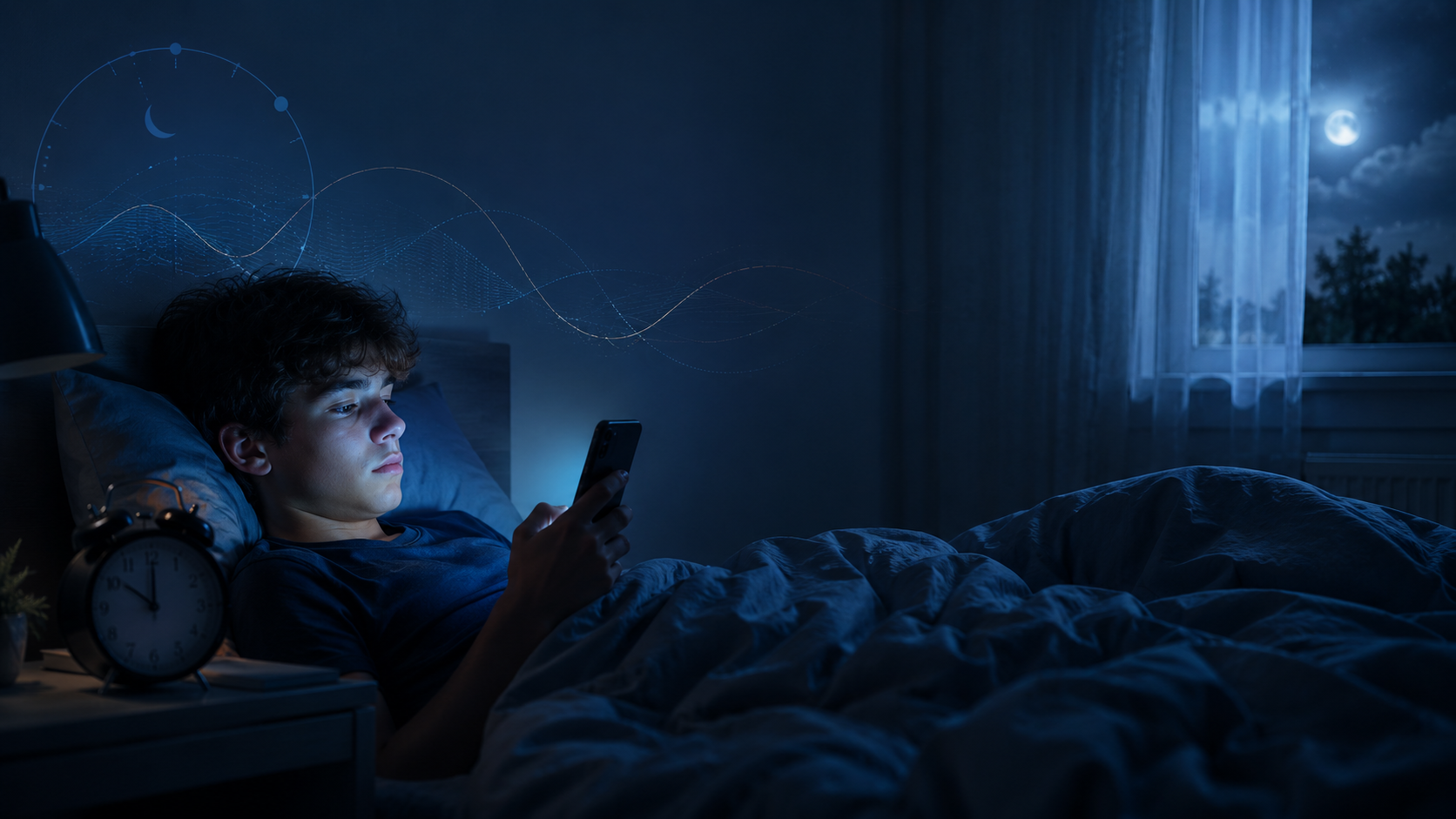
When the Screen Goes Dark: Sleep, Screens, and the Adolescent Brain
Sleep is not the brain going offline. It is the brain doing different work.
When digital media disrupts sleep, it does not only affect the night. It follows young people into the morning, into the classroom, into their relationships, into their mood, and into their capacity to cope.
That is why sleep deserves more attention in our conversations about problematic digital media use. Sometimes the most important effect of a device is not what it does while a young person is using it.
It is what it prevents the brain from doing after the screen goes dark.

Why We Struggle to Be Alone With Our Thoughts
We are increasingly filling every moment with input—podcasts, music, notifications, content. But what happens when there’s nothing directing our attention? This article explores why being alone with our thoughts can feel uncomfortable, and what constant input may be changing about how we think.

Emotional Outsourcing: When We Rely on Others to Regulate Us
Emotional regulation is something we are meant to develop internally. But in a world of constant connection and immediate feedback, it has become easier than ever to rely on external sources to manage our emotional states. This piece examines the rise of emotional outsourcing and its implications for development.

We Made Life Easier. Why Does It Feel Harder?
We are offering more support than ever before, while at the same time reducing the amount of friction people encounter in everyday life. Yet many young people report feeling less able to cope with ordinary stress, uncertainty, and challenge. This raises an important question: what happens to development when the conditions that build capacity are quietly removed?