
Are Children’s Social Skills Disappearing?
Are children losing their social skills—or are they getting fewer chances to practice them?
Social skills don’t disappear. They develop, or stall, based on experience. In a world where discomfort is easier to avoid and interaction is increasingly mediated by screens, many children are simply under-practiced. This article explains what developmental psychology tells us about social learning, why the real change is practice rather than capacity, and how parents and educators can support social growth at every age.
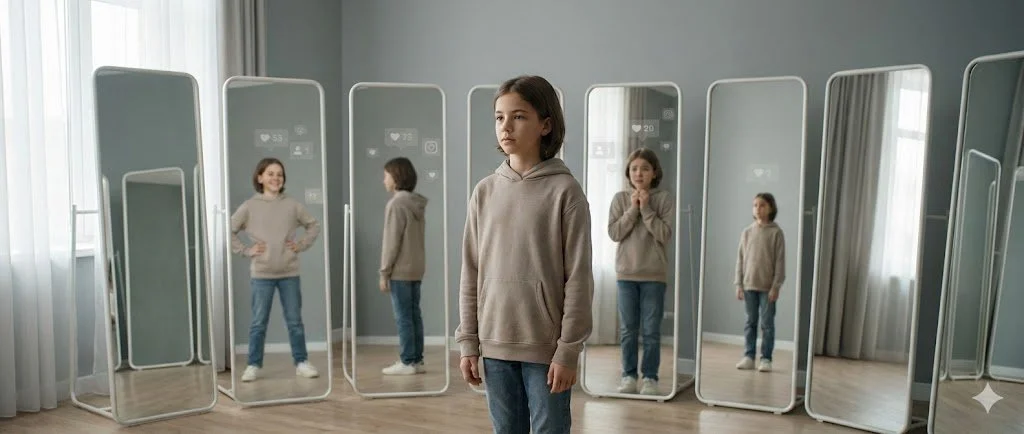
Why Digital Comparison Hits Kids So Hard
Today’s kids aren’t just comparing themselves to classmates, they’re measuring themselves against thousands of curated, filtered, and algorithmically amplified “peers.” The result is a subtle but powerful shift in how young people evaluate themselves, their progress, and their worth. This post explains why digital comparison hits kids so hard, what educators and parents are seeing, and how to help children rebuild a more grounded, resilient sense of self.

Identity Drift: How Digital Spaces Reshape Who We Think We Are
Identity Drift is the subtle psychological shift that happens when our sense of self becomes shaped more by digital signals than real experiences.
From curated feeds to algorithmic mirrors, social media can quietly pull our identity away from who we are and toward who we think we should be.
This post explores how—and how to reclaim a grounded, stable sense of self in a digital world.
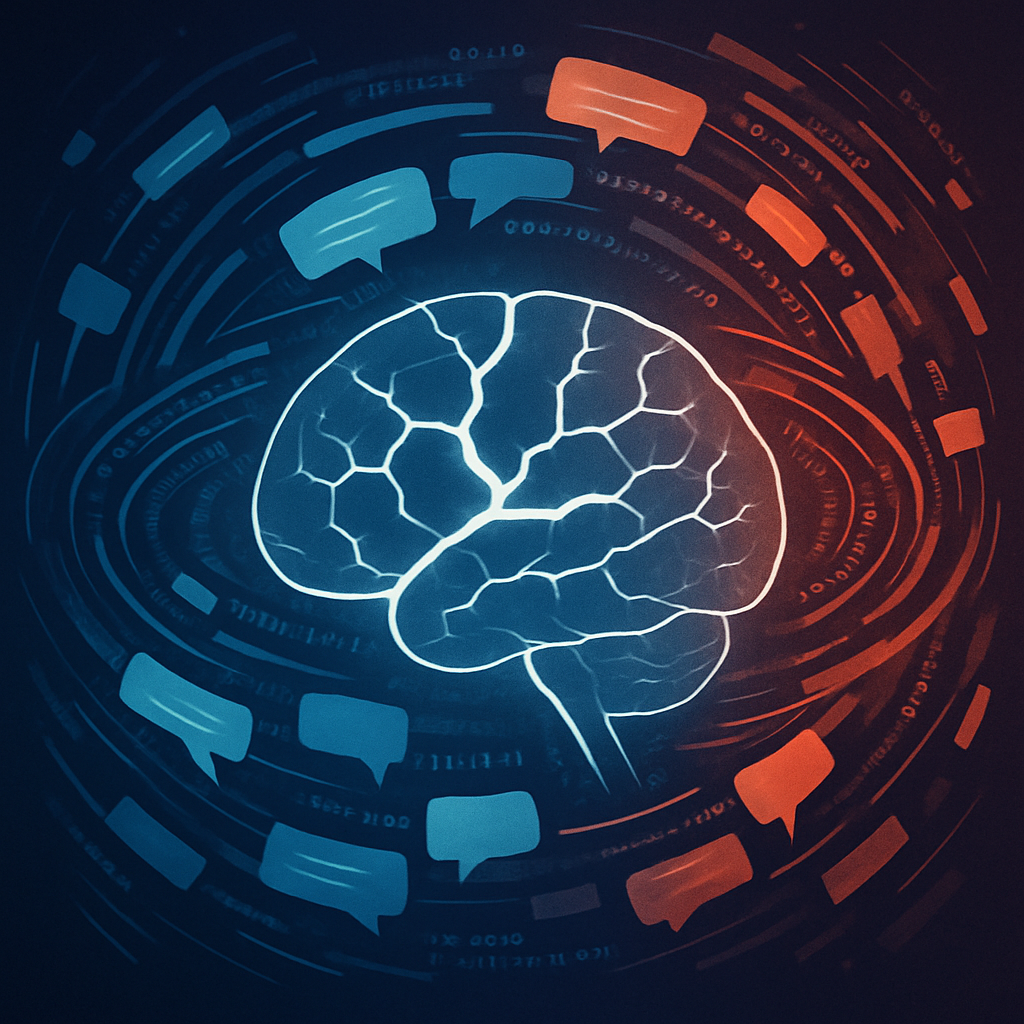
The Certainty Trap: Why Fast Feels True
We live in an era where information moves faster than reflection. Our attention is constantly fragmented, and in that state, the mind leans toward whatever feels familiar, simple, and certain—even when it isn’t true. This is the Certainty Trap: a cognitive shortcut that forms when a tired or overloaded brain prefers quick answers over complex, accurate ones. Digital environments amplify this tendency by rewarding speed, novelty, and emotional intensity, making shallow processing feel like understanding and repetition feel like truth. Over time, nuance becomes uncomfortable, ambiguity feels like friction, and misinformation spreads not because people lack intelligence but because they lack bandwidth. The solution isn’t withdrawal—it’s rebuilding the cognitive conditions that allow depth, analysis, and reflection. By slowing down, questioning more gently, and using tools like AI as thinking partners rather than shortcuts, we can reclaim the capacity for deeper understanding in a world increasingly optimized for certainty.

The Restoration Gap: What Happens After the Scroll Stops
There is a moment after you stop scrolling that feels like calm, a small settling, a quiet pause, but the feeling is deceptive. What we experience in that instant is not restoration. It is relief, a brief drop in dopamine that marks the end of stimulation but does not activate the systems that actually allow the body to rest.
This gap between stopping and settling is what researchers call incomplete recovery. The nervous system remains partially activated, which is why so many people feel both exhausted and restless after trying to “unwind” with digital media.
Modern platforms extend this state by using behavioral signals to detect when our engagement is fading, then serving content designed to restart the anticipation loop. We drift back in, not because we lack discipline, but because the body has not yet shifted into repair.
Closing this restoration gap is not about rejecting technology. It is about relearning how rest works.

When Awareness Becomes Anxiety: How Guilt and Worry Keep Us Stuck Online
It’s late. You meant to check your phone for a minute, but an hour disappears. Guilt turns to shame, worry follows, and you reach for your phone again. Learn how compassionate awareness can break the loop.

The Validation Loop: How Social Approval Drives Compulsive Checking
Every like or comment delivers a tiny hit of dopamine, keeping us coming back for more. Learn how the need for social approval creates a “validation loop” — and how to break free.