We Made Life Easier. Why Does It Feel Harder?
We are offering more support than ever before, while at the same time reducing the amount of friction people encounter in everyday life. Yet many young people report feeling less able to cope with ordinary stress, uncertainty, and challenge. This raises an important question: what happens to development when the conditions that build capacity are quietly removed?

Why Motivation Disappears When Everything Gets Easier
We often talk about motivation as if it’s something we can lose, rebuild, or recover. But what if the issue isn't a lack of willpower, but rather a lack of situations that actually demand effort?

Beyond the Attention Span: Building a Tolerance for Uncertainty
We often think of attention as a battery that runs out, but what if it’s actually a muscle we’ve forgotten how to flex? From the tension of a live NHL arena to the "fog" of a struggling student, this post explores why our modern "escape hatches" are eroding our ability to sit with discomfort—and why the secret to focus isn't trying harder, but learning to stay.

The Disappearing Skill of Starting
When a student sits frozen in front of a blank page, we often label it as a lack of motivation or ability. But what if the problem is simpler? What if 'starting' is a skill that is quietly disappearing in the age of instant digital gratification? Explore why the hardest part of any journey is the first step—and how we can help children rebuild their 'starting muscle

The Lost Art of Staring Out the Window
When the brain isn’t occupied by external stimulation, it begins to turn inward. Psychologists call this the 'Default Mode Network'—a state where the mind replays memories, connects ideas, and experiments with scenarios. In our rush to provide constant digital entertainment, we are unintentionally eliminating the mental space where imagination and self-directed thinking begin. It’s time we stop treating boredom as a problem to be solved and start seeing it as a developmental necessity.

Productive Struggle in a Frictionless World
When friction disappears, we don’t just remove discomfort; we remove practice.

Are We Raising Emotionally Avoidant Adults and Calling It Self-Care?
Is our current definition of 'protecting our peace' actually stunted growth in disguise? Real self-care was never meant to eliminate challenges, it was meant to restore our capacity to face them. It’s time to stop mistaking avoidance for strength and start building the stamina to stay present in the discomfort.

Relief vs. Regulation: The Difference Between Calming Your Child and Teaching Them How to Calm Themselves
You’re at a restaurant. Your child starts to unravel. You hand over your phone. Instantly, the crying stops. Calm returns. It feels like a solution.
If screen time is so harmful, why does it work so well?
The answer lies in the difference between relief and regulation. Phones provide fast, external relief from discomfort. But relief is not the same as teaching a child how to manage difficult emotions on their own.
When we consistently remove distress rather than allowing children to move through it, we may unintentionally limit the development of frustration tolerance and emotional resilience.
This isn’t about banning screens or eliminating comfort. It’s about understanding what patterns we’re reinforcing — and what kind of capacity we’re building for the long term.

What to Do When You've Taken the Phone, and Now Everything Feels Worse
Your 12-year-old is crying. You've just taken their phone away, and every instinct says: give it back, explain one more time, do something. But what if the kindest thing you can do right now is... nothing? This post explores why distress is not harm, why explaining rules to a dysregulated child backfires, and how to "hold the limit" without saying a word.
What To Do When Your Child Is Stuck on Their Phone, and You’re Out of Answers
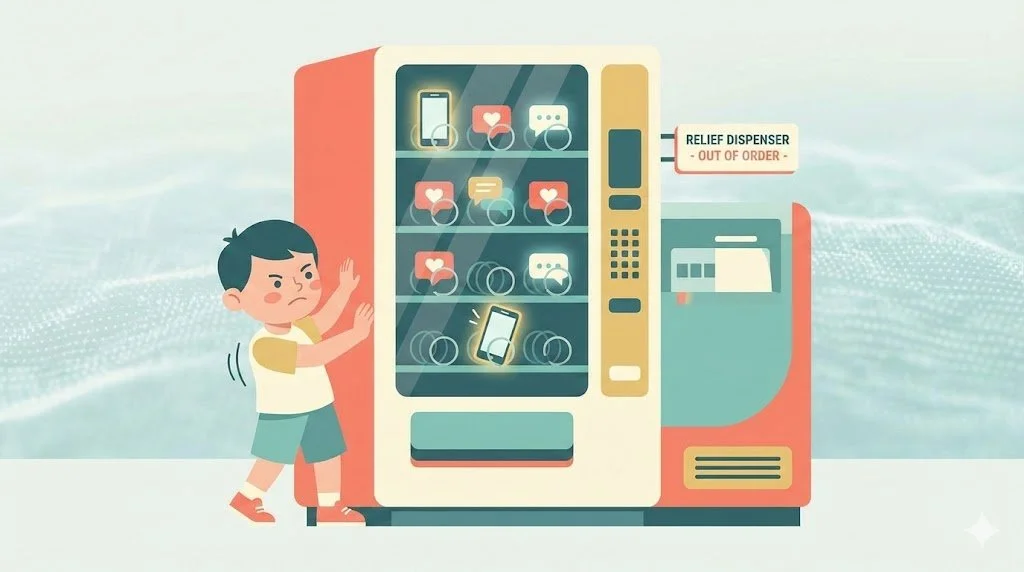
Does asking your child to put down their phone feel like starting a war? You aren't alone. When simple limits turn into explosive battles, 'just taking it away' often backfires. Here is why the conflict escalates, what an 'extinction burst' actually is, and how you can move from constant policing to building your child's capacity to cope without a screen.
Why Our Thinking About Screens and AI Keeps Missing the Point
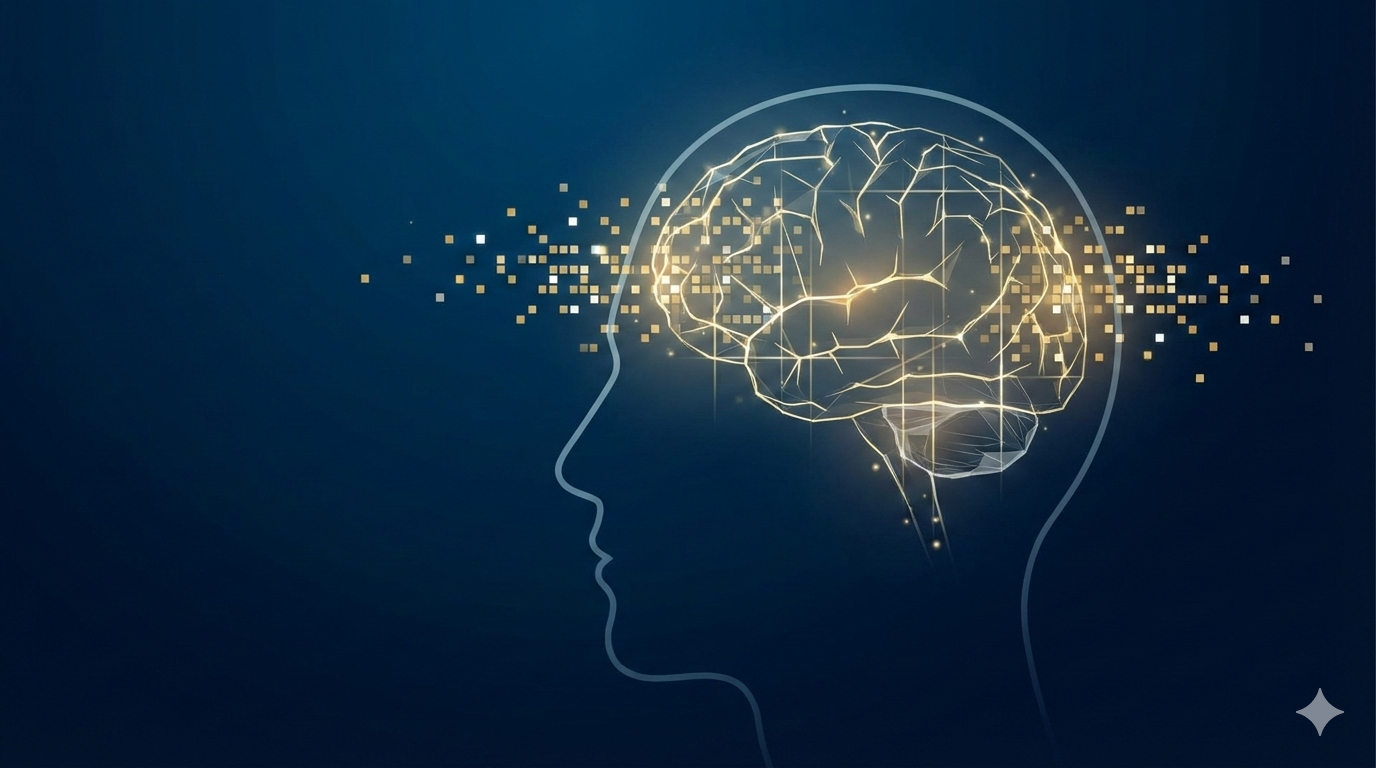
Most conversations about screens and AI focus on how much time children spend, what digital tools replace, or whether content is “good” or “bad.” This article argues that those questions miss a deeper issue. Development is shaped by what children repeatedly practice. Modern digital environments often reinforce escape from discomfort and constant anticipation, training attention, emotion, and effort in subtle but powerful ways. Understanding this shift is essential if we want responses that build capacity rather than chase symptoms.
We’re Not Raising Addicted Kids. We’re Raising Dysregulated Nervous Systems.
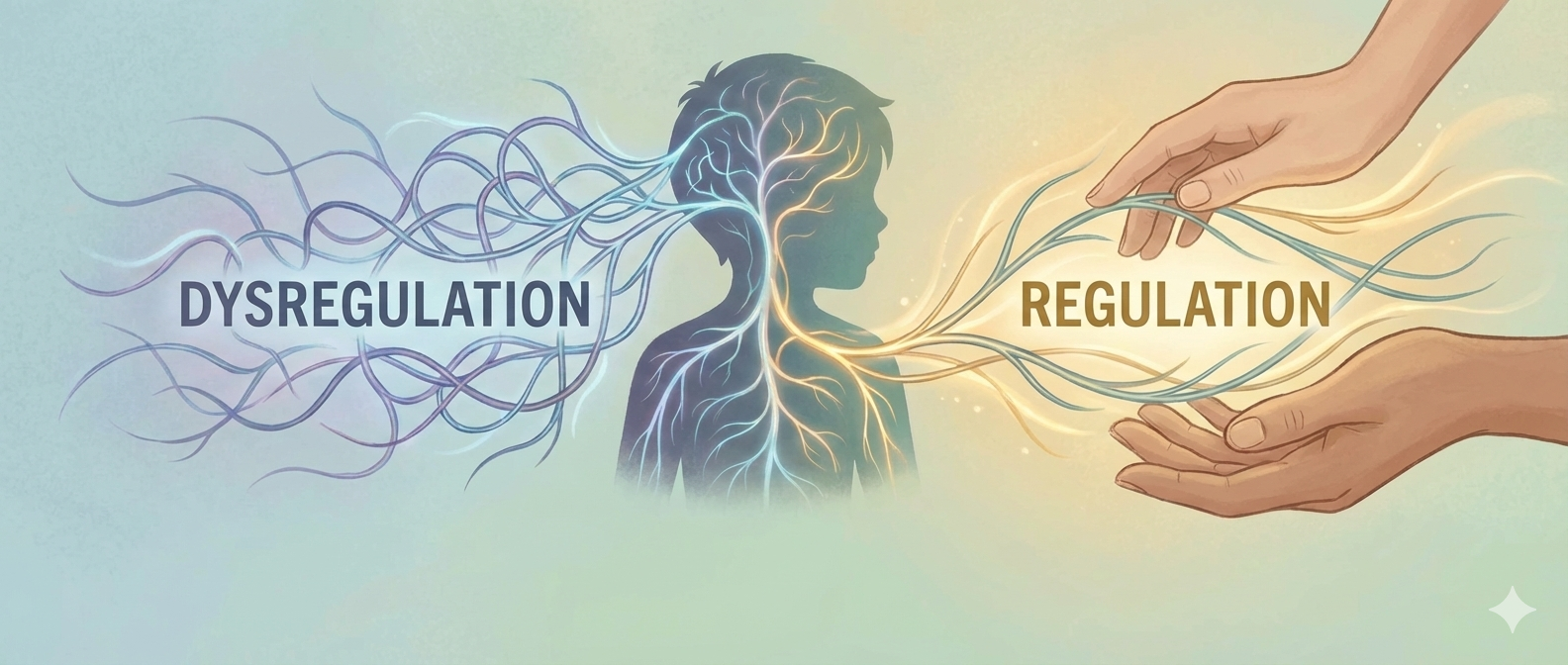
Children aren’t addicted to screens. They’re navigating a world that overwhelms developing nervous systems. When we shift the conversation from fear to regulation, we stop trying to control behavior and start building the skills children actually need to recover, adapt, and grow.
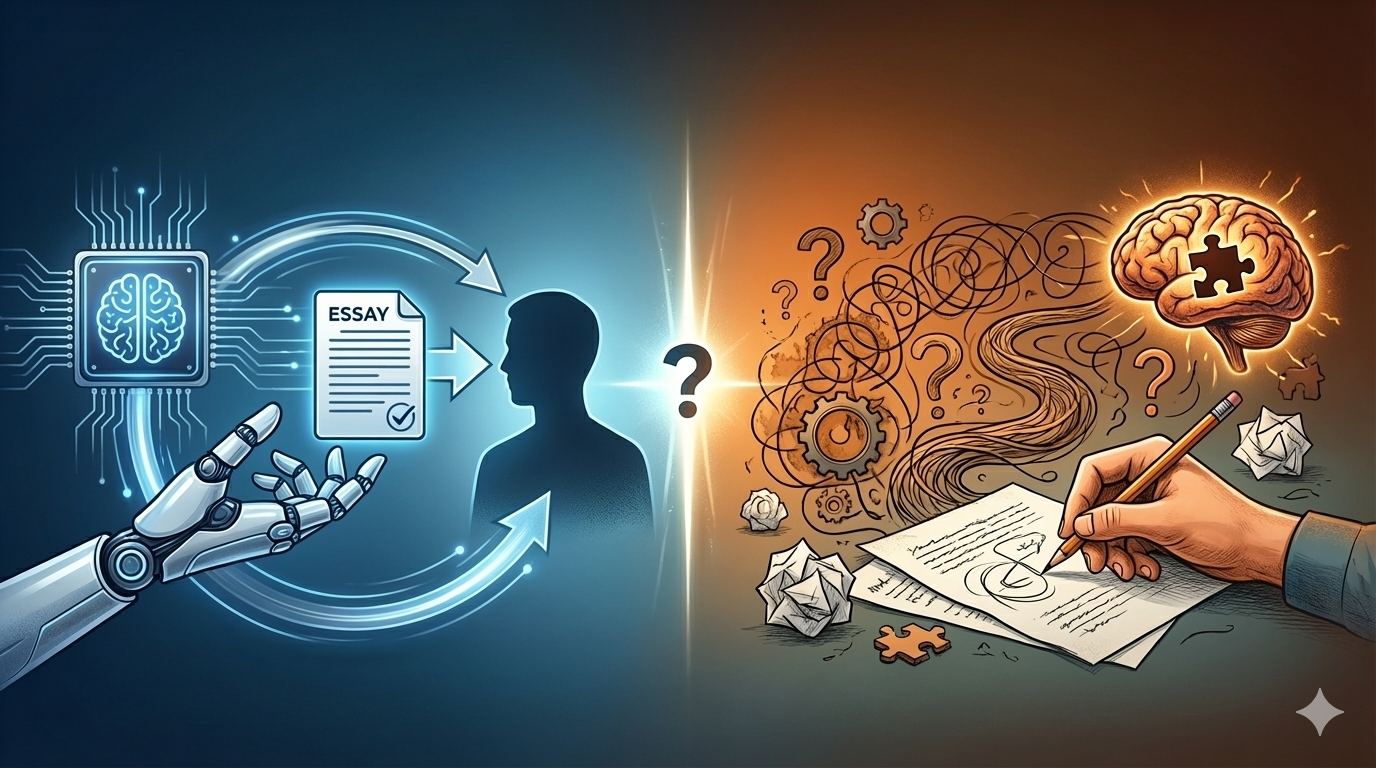
The Hidden Cost of Efficient Learning
Is the pursuit of efficiency in digital learning inadvertently creating a hidden cost? My latest blog post, "The Hidden Cost of Efficient Learning," explores why active, effortful learning is more critical than ever in the age of digital media and AI.
This isn't about rejecting technology, but repositioning it. Join the conversation on how we can design learning experiences that restore curiosity, agency, and deep understanding.

AI Didn’t Break Learning, It Changed What Learning Feels Like
Digital media and AI promise clarity, speed, and effortless learning. But real learning has never worked that way. This article explores how AI reshapes what learning feels like—and why struggle, confusion, and effort still matter for deep understanding.

From Discomfort to Escalation: What Happens When Social Regulation Fails Online
Online interactions often escalate not because people have changed, but because the systems that normally regulate social behavior are weakened or missing. When emotional cues disappear and speed increases, misunderstanding grows, regulation strains, and conflict becomes more likely, especially for developing minds.

Are Children’s Social Skills Disappearing?
Are children losing their social skills—or are they getting fewer chances to practice them?
Social skills don’t disappear. They develop, or stall, based on experience. In a world where discomfort is easier to avoid and interaction is increasingly mediated by screens, many children are simply under-practiced. This article explains what developmental psychology tells us about social learning, why the real change is practice rather than capacity, and how parents and educators can support social growth at every age.
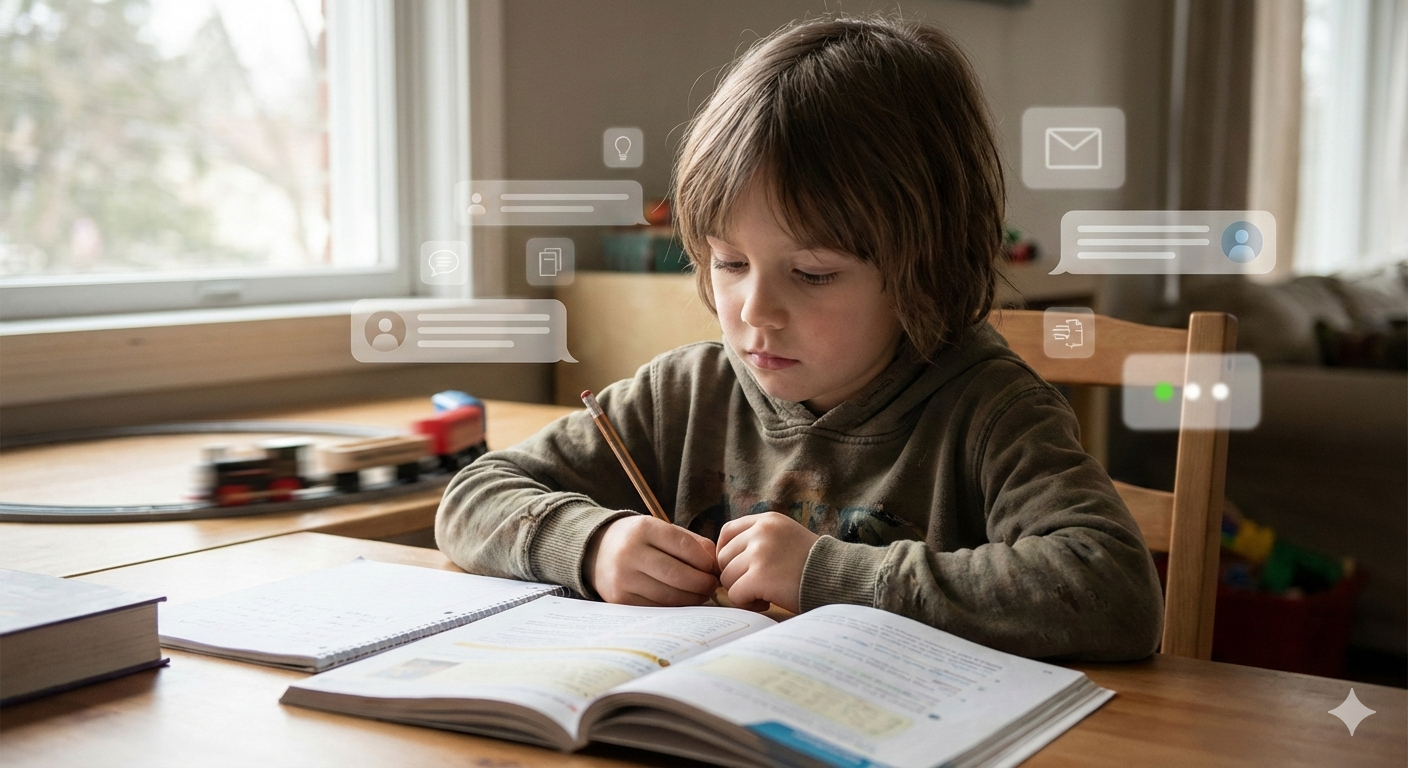
Kids Aren’t Losing Their Attention. They’re Getting Practice at Switching
Many parents and educators worry that children are losing their ability to focus. This article explains why attention isn’t disappearing, but adapting. Drawing on developmental psychology and cognitive science, it shows how modern environments train the brain for rapid switching rather than sustained attention — and how focus can be rebuilt through practice, not pressure.
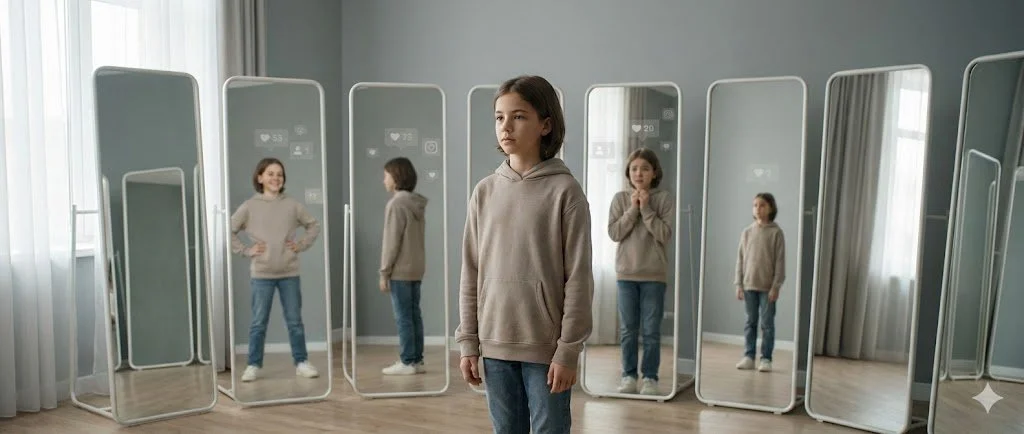
Why Digital Comparison Hits Kids So Hard
Today’s kids aren’t just comparing themselves to classmates, they’re measuring themselves against thousands of curated, filtered, and algorithmically amplified “peers.” The result is a subtle but powerful shift in how young people evaluate themselves, their progress, and their worth. This post explains why digital comparison hits kids so hard, what educators and parents are seeing, and how to help children rebuild a more grounded, resilient sense of self.

Identity Drift: How Digital Spaces Reshape Who We Think We Are
Identity Drift is the subtle psychological shift that happens when our sense of self becomes shaped more by digital signals than real experiences.
From curated feeds to algorithmic mirrors, social media can quietly pull our identity away from who we are and toward who we think we should be.
This post explores how—and how to reclaim a grounded, stable sense of self in a digital world.
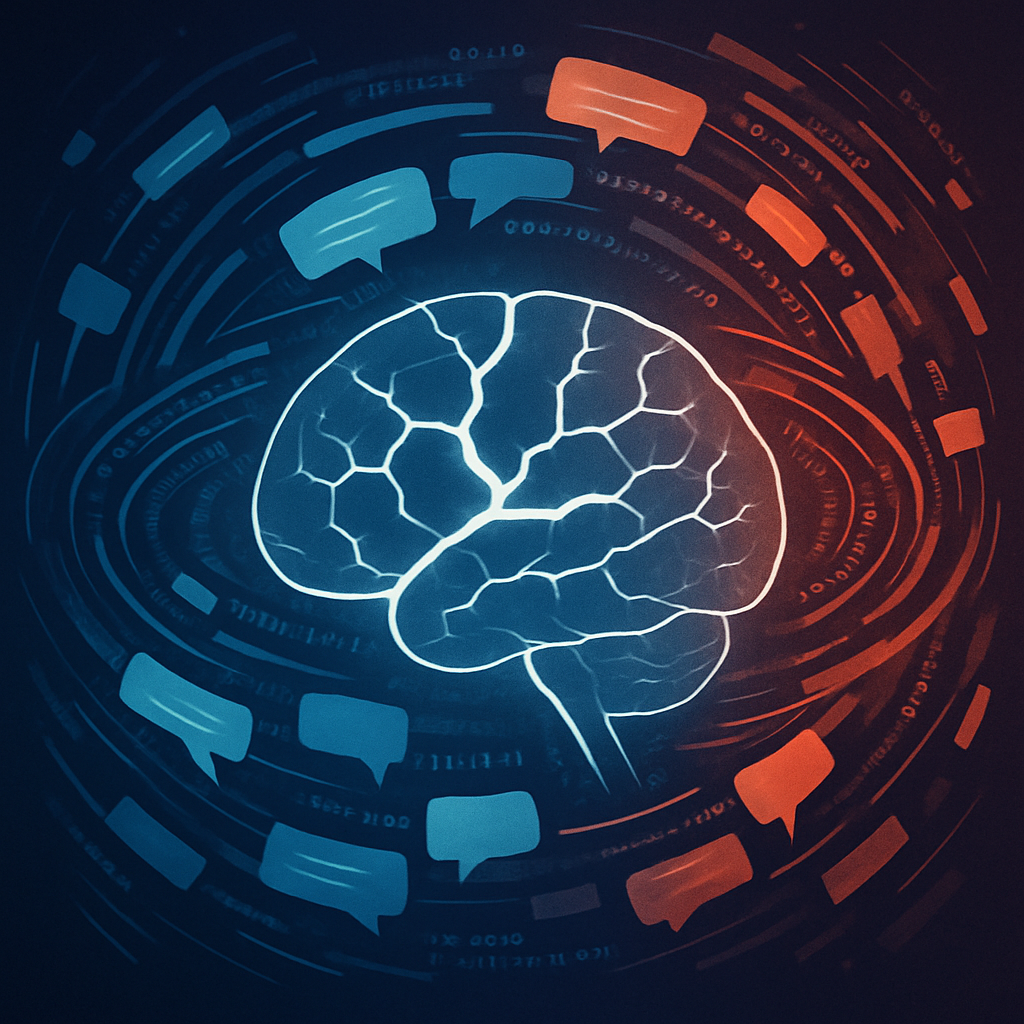
The Certainty Trap: Why Fast Feels True
We live in an era where information moves faster than reflection. Our attention is constantly fragmented, and in that state, the mind leans toward whatever feels familiar, simple, and certain—even when it isn’t true. This is the Certainty Trap: a cognitive shortcut that forms when a tired or overloaded brain prefers quick answers over complex, accurate ones. Digital environments amplify this tendency by rewarding speed, novelty, and emotional intensity, making shallow processing feel like understanding and repetition feel like truth. Over time, nuance becomes uncomfortable, ambiguity feels like friction, and misinformation spreads not because people lack intelligence but because they lack bandwidth. The solution isn’t withdrawal—it’s rebuilding the cognitive conditions that allow depth, analysis, and reflection. By slowing down, questioning more gently, and using tools like AI as thinking partners rather than shortcuts, we can reclaim the capacity for deeper understanding in a world increasingly optimized for certainty.